


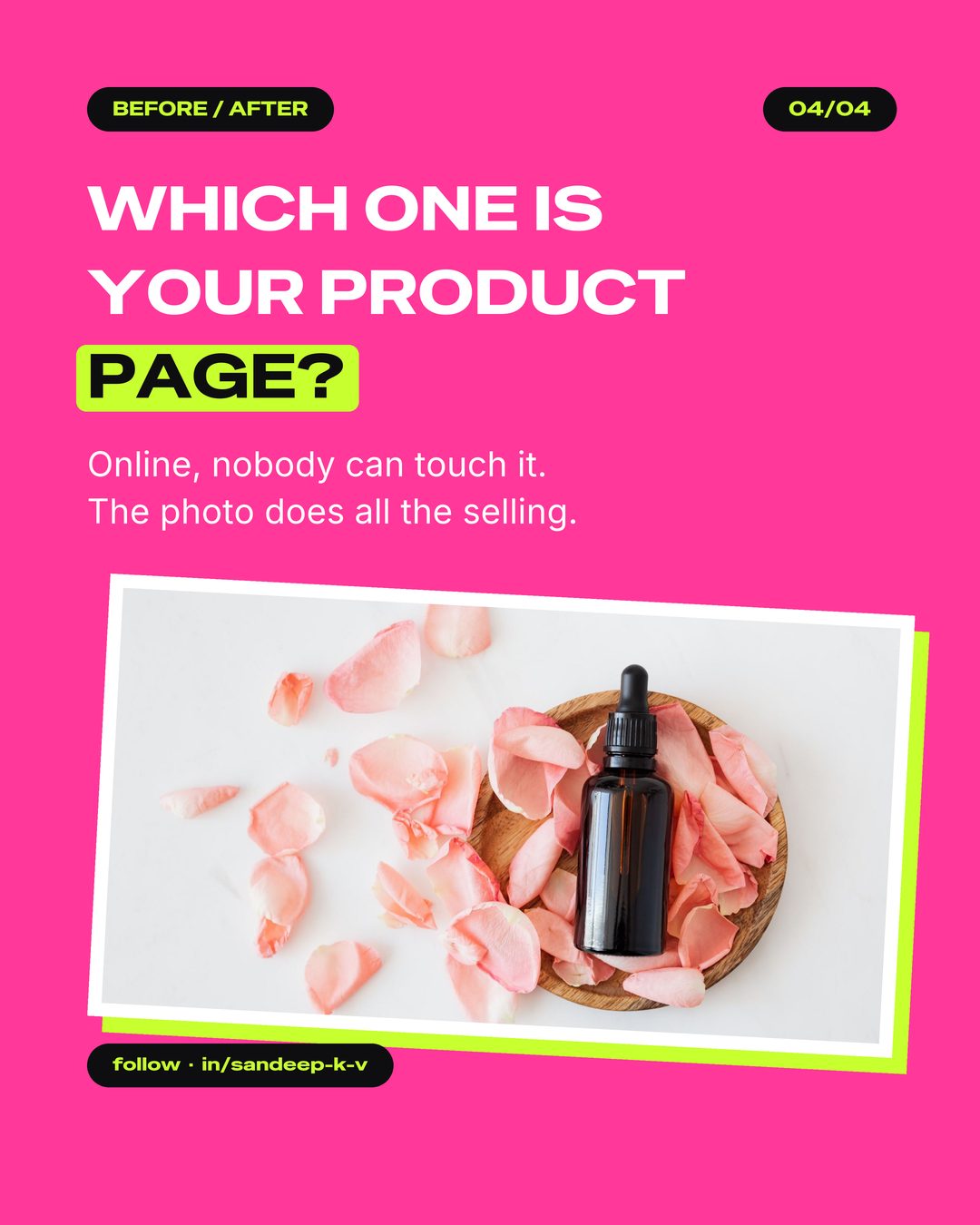
Swipe the before / after ›
In a real shop, a customer can pick the thing up. Turn it over. Feel the weight, hold it to the light, try it on, decide it is worth the money with their own hands.
Online they can do none of that.
Every sense you have leaned on for a hundred years of retail collapses into one thing. The photo. That single image is now your shop floor, your sales assistant, your fitting room and your returns desk, all at once. And most brands treat it like an afterthought shot on a phone in the stockroom.
Here is what that looks like in practice. A brand will happily spend three thousand pounds a month driving traffic to a product page, then land all of it on a grey, badly lit photo that answers none of the questions a pair of hands would have answered in a second. The ad did its job. The photo lost the sale.
I have watched one reshoot, same product, same price, photography that finally showed the scale and the texture and what you actually get, lift conversion on a page by roughly a third. Nothing else changed. The product did not get better. The customer just finally believed it.
A great photo is not decoration. It is the answer to the only question a shopper is really asking, which is what am I actually getting. The shot with a hand in it for scale. The close-up on the texture. The one that shows it in a real room instead of floating on a white void. Those are not nice-to-haves. They are the objections your best salesperson would handle out loud, handled silently, in advance.
So before you pour another pound into ads, look hard at the page they land on. You are not underspending on traffic. You are underspending on the one salesperson who works every hour, never takes a break, and closes the sale without saying a word.