Swipe through the deck ›
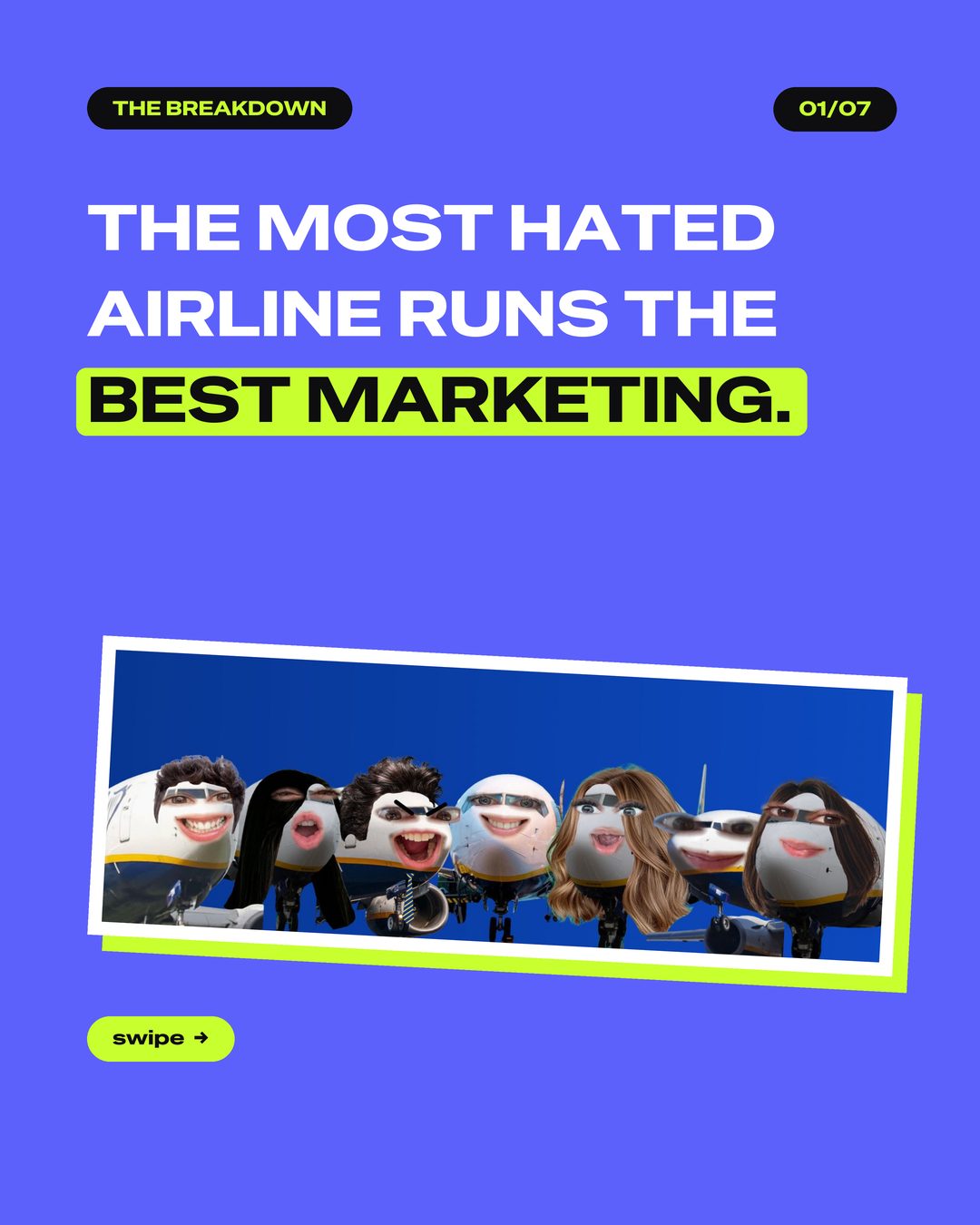
The most hated airline in Europe runs the marketing every other brand secretly wishes it had.
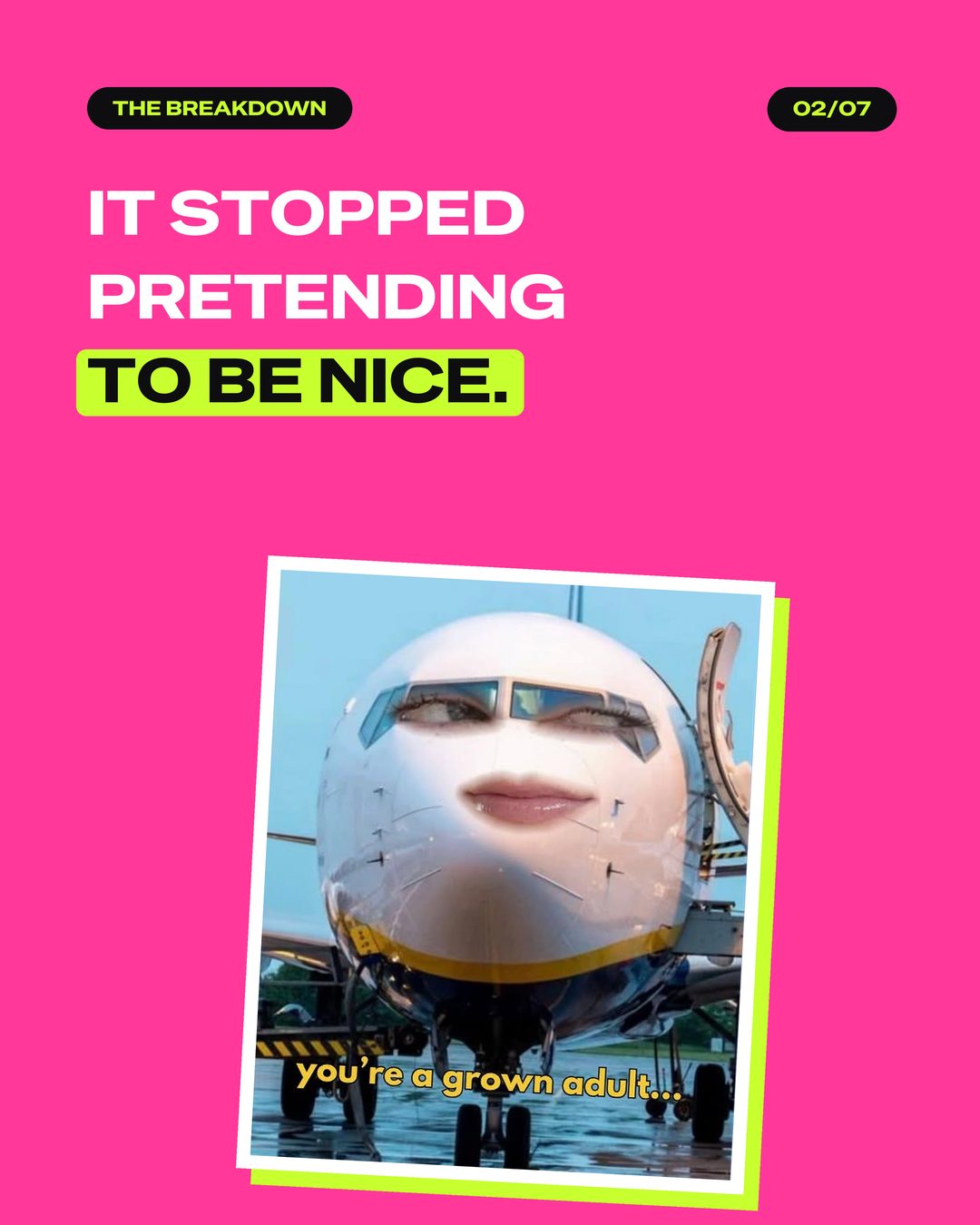
That sentence should not make sense. Hated brands are supposed to lose. They are supposed to spend a fortune apologising, softening the edges, promising they have changed. Ryanair looked at that whole playbook and set it on fire.
A passenger once complained that their seat had no window. A real person, genuinely annoyed, posting the photo as evidence. The kind of complaint most brands bury under a “so sorry to hear this, please DM us” and a stock apology.
Ryanair replied, in public: we sell seats, not windows.
That is the whole strategy in five words.
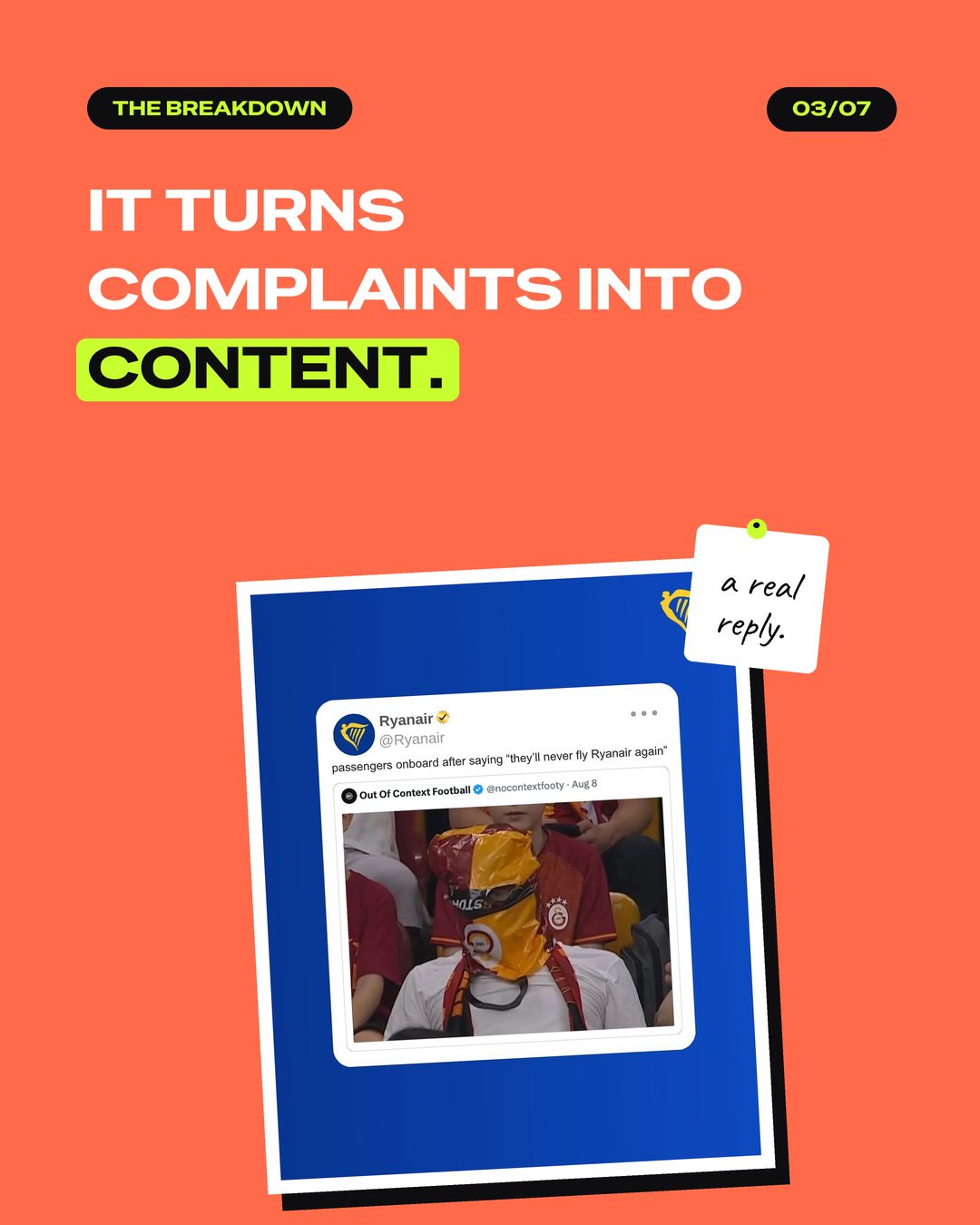
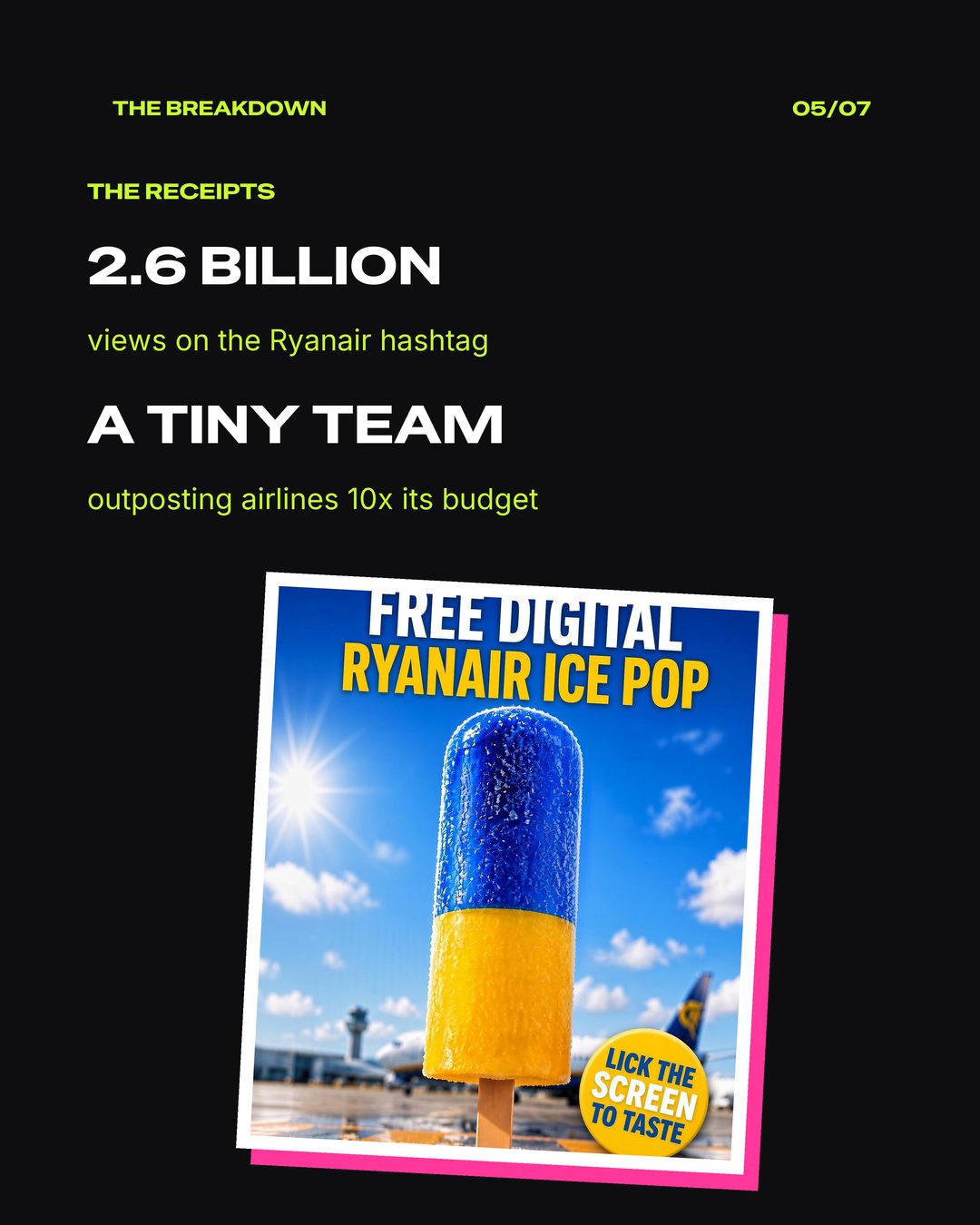
Here is what that looks like in practice. Ryanair built what its own team calls a hate funnel. They take the moans, the one-star reviews, the photos of tiny legroom, and instead of hiding them, they put them on stage and laugh first. The Ryanair hashtag has passed 2.6 billion views. A tiny social team is out-posting airlines with ten times its budget. The customer service reply is the advert now.
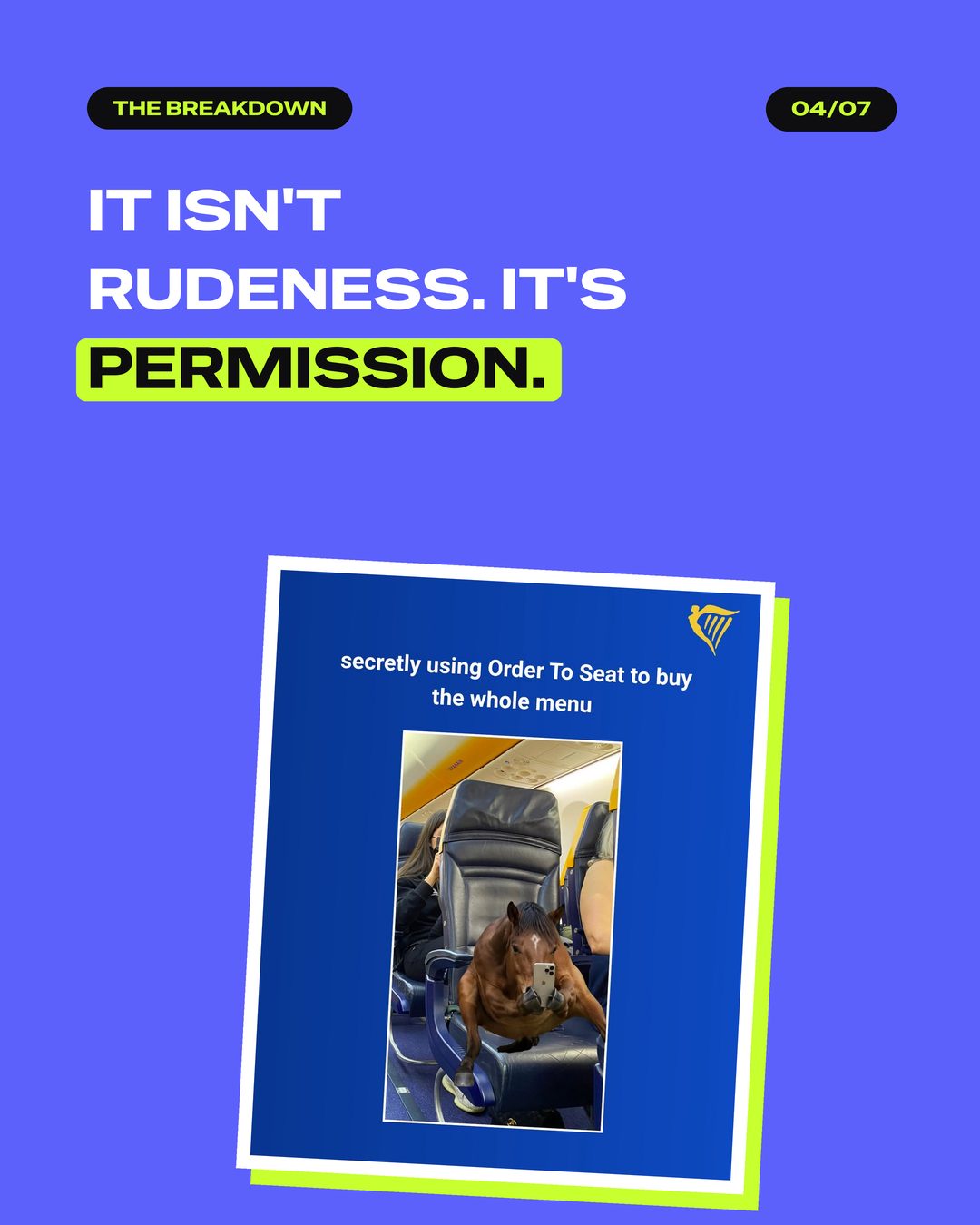
And it works for a reason that has nothing to do with being rude.
Their customer already chose the cheap seat. They knew about the fees, the legroom, the surcharge for daring to bring a bag. They made peace with all of it before they ever booked. So when Ryanair jokes about the exact thing they signed up for, it does not insult them. It tells them their decision was smart. The joke pulls the customer onto the same side of the table.
That is the bit most brands get wrong about their own flaws. They treat every weakness as a secret to be managed. Meanwhile the customer already knows. Everyone already knows. The only question is whether you say it first and get the laugh, or stay silent and let it harden into a complaint.
Own the flaw out loud, and it stops being a flaw. It becomes a personality.
So the homework is not “how do we fix what people criticise”. It is quieter and harder. What do you keep apologising for, and what would happen if you said it proudly instead?
Because the thing you are embarrassed about is usually not your weakness. It is the most honest, most likeable thing you have. Ryanair worked that out. They stopped selling the window nobody was promised, and started selling the seat everyone actually booked.