
Swipe the breakdown ›
Oatly knew people would hate its Super Bowl advert, so it printed the complaint on a T-shirt before anyone could make it.
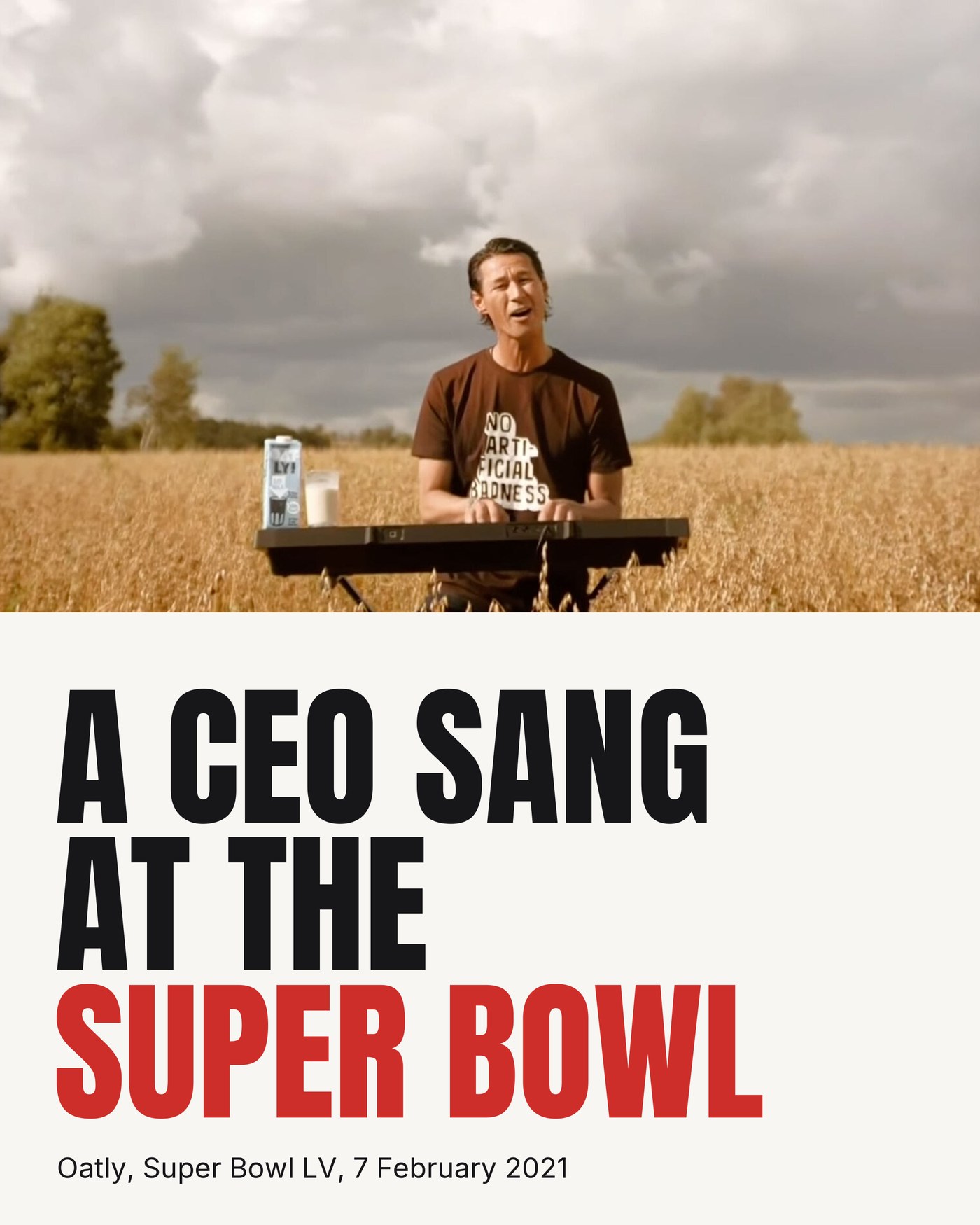
On 7 February 2021, in a slot costing at least $5.5 million, Super Bowl viewers got thirty seconds of Oatly’s chief executive, Toni Petersson, standing at a keyboard in the middle of an oat field, singing about oat milk. Wow, no cow.
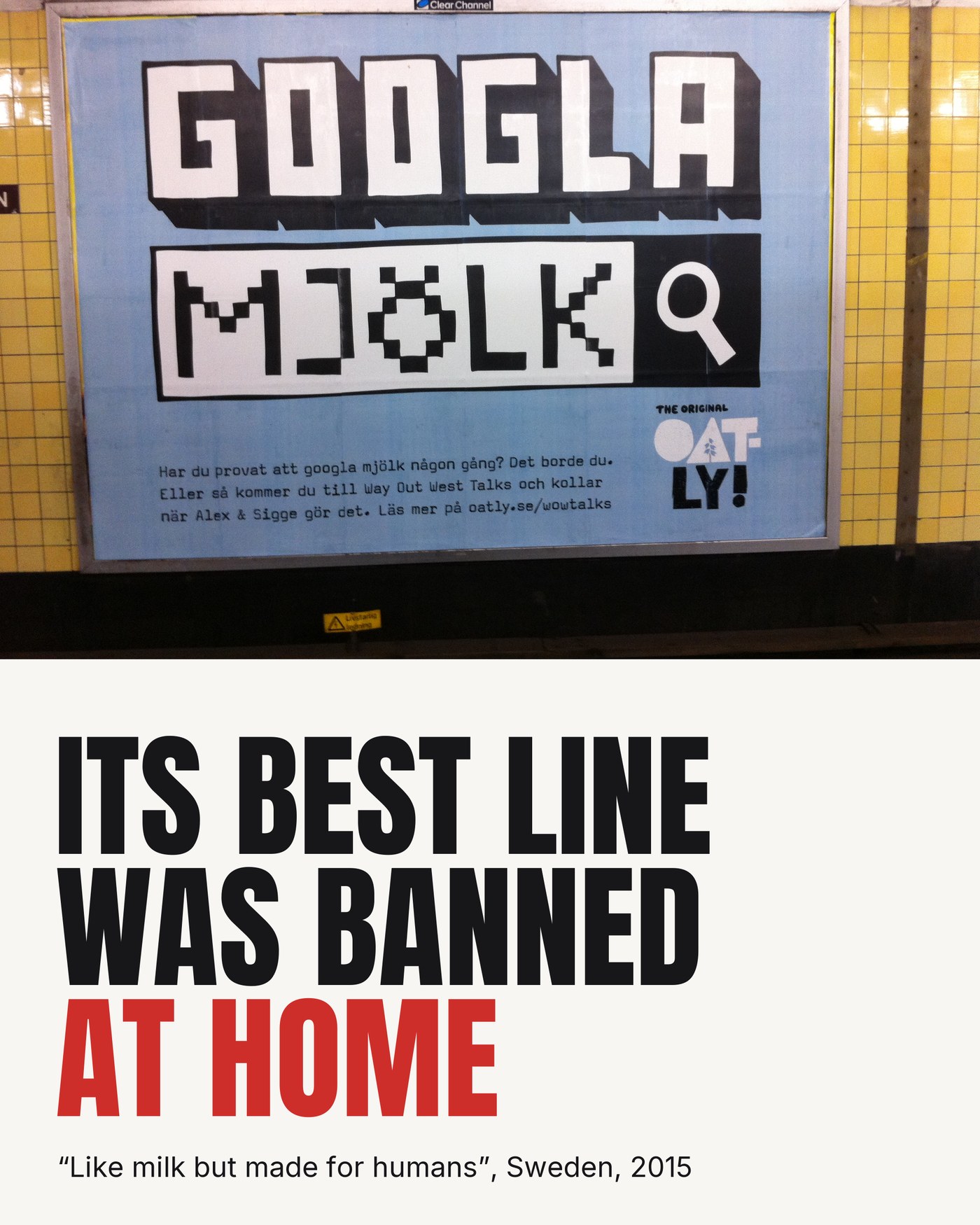
It was not built to be liked. One of the lyrics, “it’s like milk but made for humans”, was a line a Swedish court had already banned Oatly from using at home in 2015, after the dairy industry took the company to court over it. Their creative chief told Adweek that not everyone was going to love the spot, and that this was fine.
The reaction split about how you would expect. Some people thought it was brilliant. A lot of people thought it was the strangest thing they had seen all night, and said so.
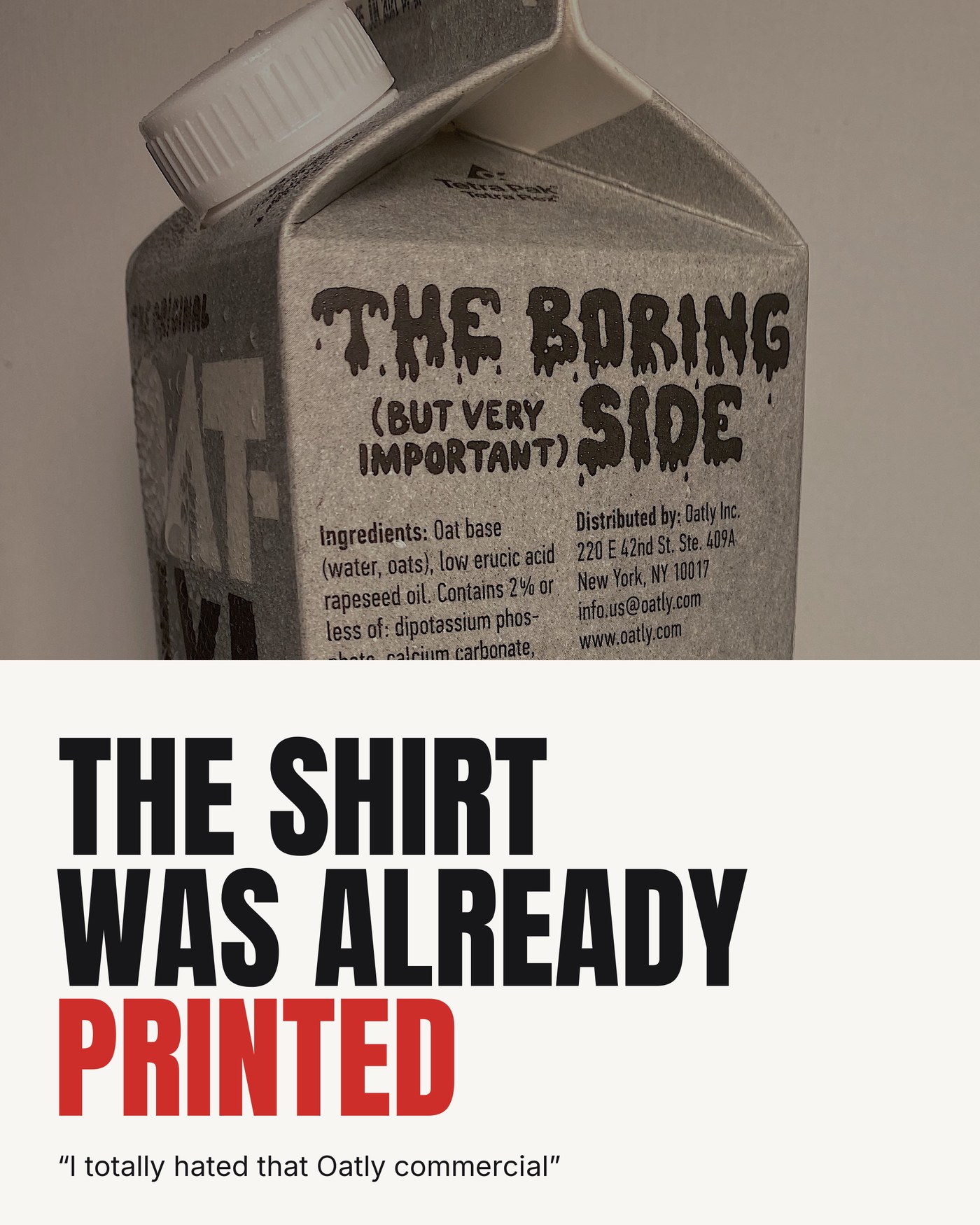
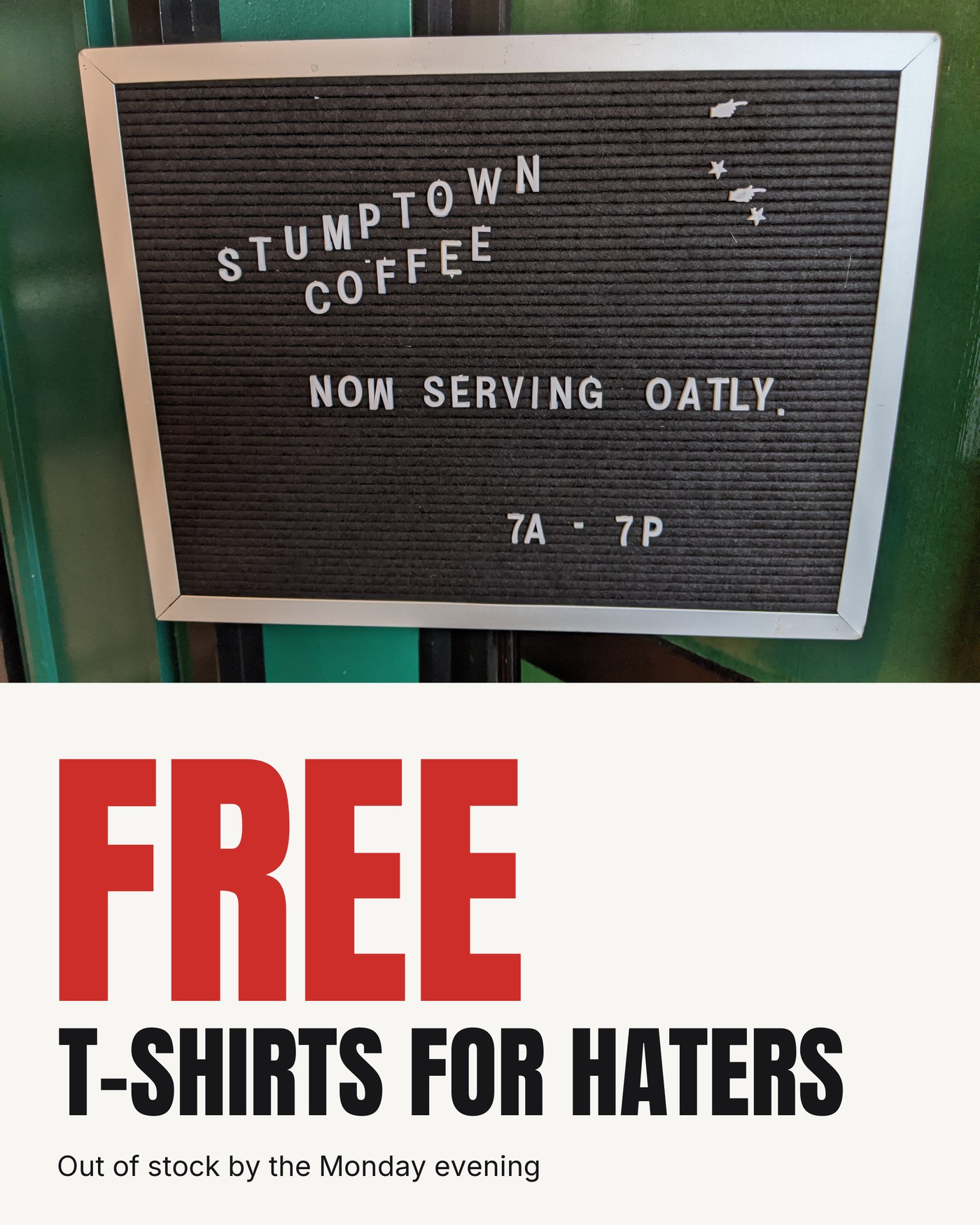
Oatly was ready for the second group. It put up a free T-shirt reading “I totally hated that Oatly commercial”. By the Monday evening the shirts were out of stock.
The part worth stealing is the order it happened in.
Most brands treat criticism like weather. It arrives, you wait it out, you put a statement together, you hope the news cycle moves on. Oatly treated it like a product with a launch date. The complaint was entirely predictable, so they wrote it themselves, first, in their own voice, with the logo on it.
Once a brand has said the mean thing about itself, the mean thing stops working as ammunition. It becomes merchandise. The critic ends up walking around wearing your name across their chest, and everyone who sees the shirt learns that the brand found the criticism funny rather than threatening.
There is a version of this that fails, and it is worth naming, because the shirt only works because of when it existed. A brand that prints the joke on the Tuesday, after two days of being dragged, is not in on the joke. It is the joke. Pre-emption is the whole mechanism. Reaction is just damage control with better art direction.
The honest read across to the rest of us is uncomfortable. Most companies already know the objection their product gets every week. Too pricey. Too slow. Too complicated. Too weird. It comes up on sales calls, in support tickets, in churn surveys, in the thing your best customer says affectionately at the end of a good meeting.
And most of us respond by hoping nobody says it too loudly in public.
The alternative is to say it first, on purpose, in a way that shows you understand it better than the person making it. That does not work for every objection. It does not work for anything that is actually a defect, because you have to fix those rather than merchandise them. But for the objections that are really just a consequence of what you have deliberately chosen to be, saying it out loud costs nothing and takes the weapon away.
Oatly did not spend $5.5 million on being liked. It spent it on being unmistakable, and then it printed the receipts for the people who disagreed.