Swipe the breakdown ›
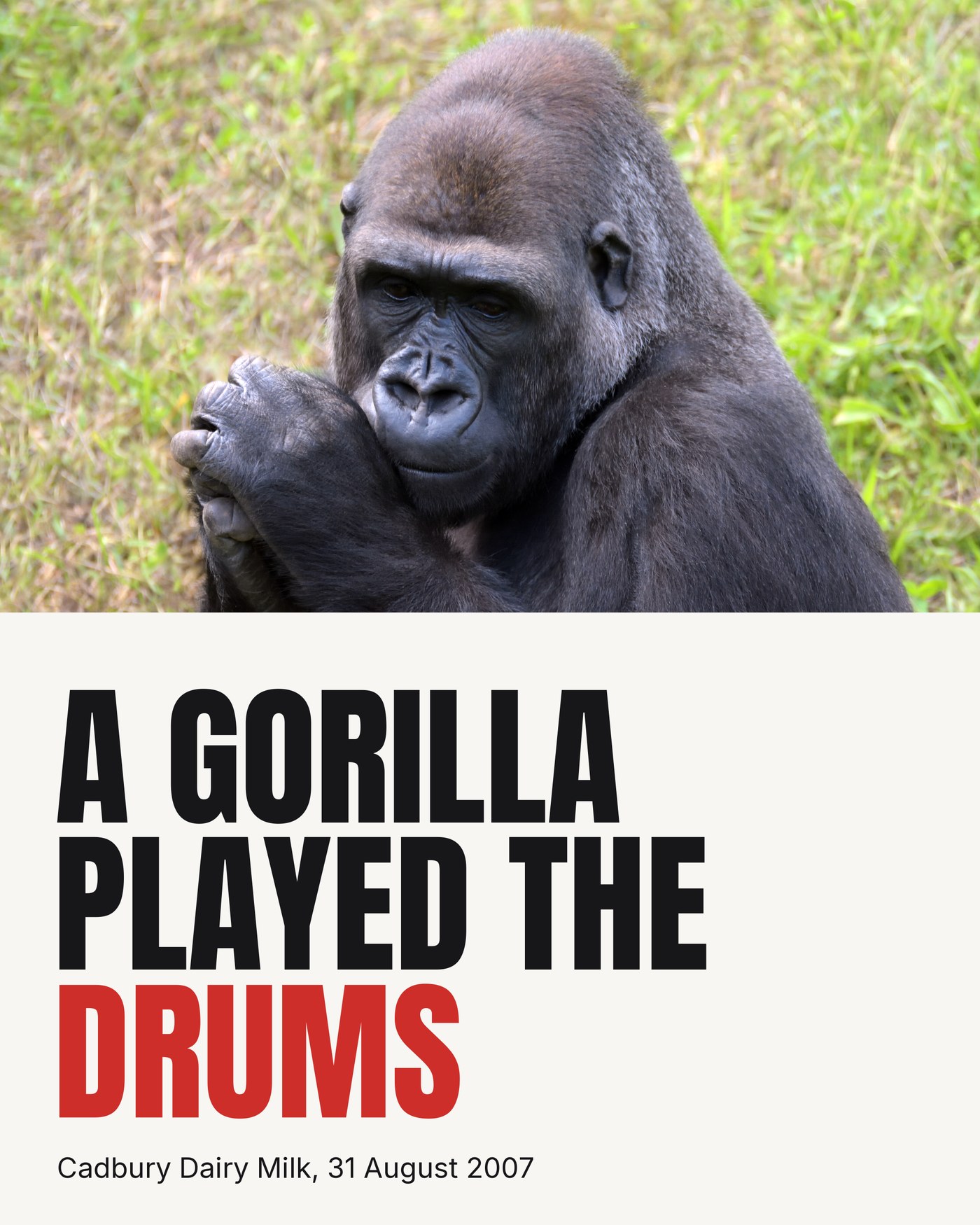
Cadbury spent 90 seconds of paid television on a gorilla playing the drums and never showed anyone a bar of chocolate.
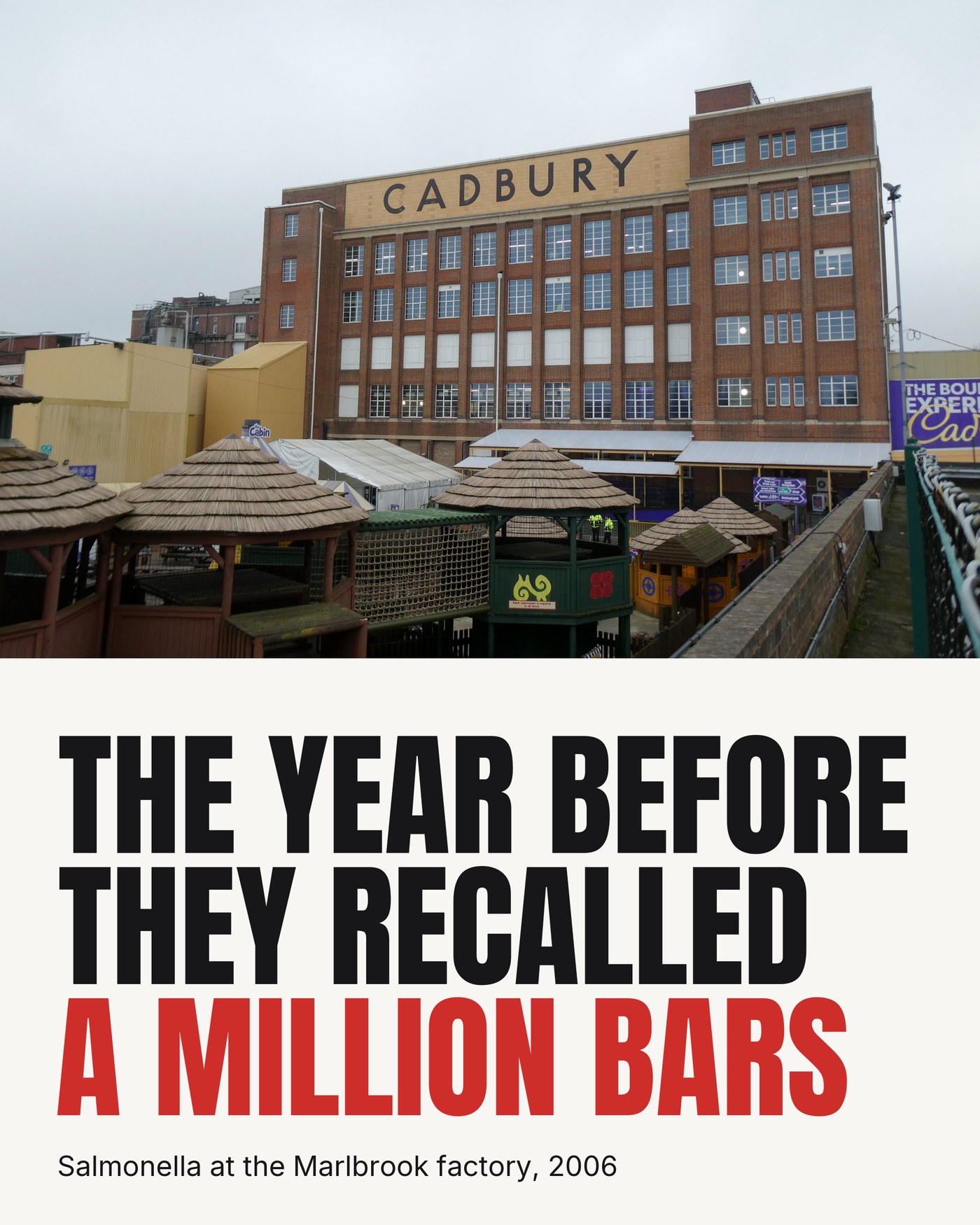
The year before, the company had pulled more than a million chocolate bars off the shelves. A leaking pipe at its Marlbrook factory had let salmonella into the line. The recall cost over £20 million, and it cost the thing that is much harder to put a number on, which is the reason someone picks Cadbury over the identical bar sitting next to it.
The brief that came out of that was not “explain ourselves”. It was, roughly, get the love back.
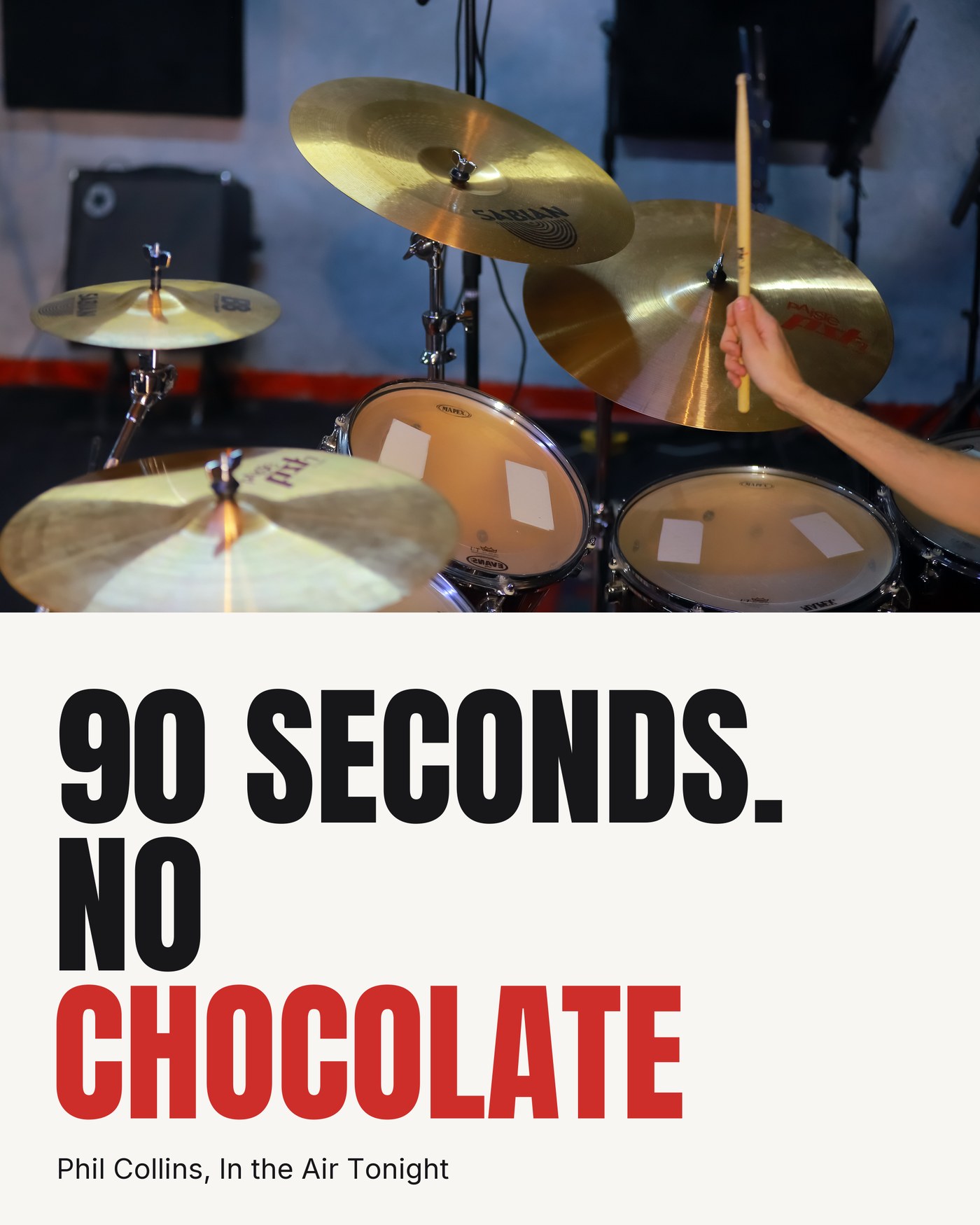
What Fallon brought back was a man in a gorilla suit sitting at a drum kit, waiting out the long slow build of Phil Collins’ In the Air Tonight, and then hitting the fill.
No chocolate. No voiceover. No claim about cocoa sourcing or factory hygiene. Nothing you could put in a results deck.
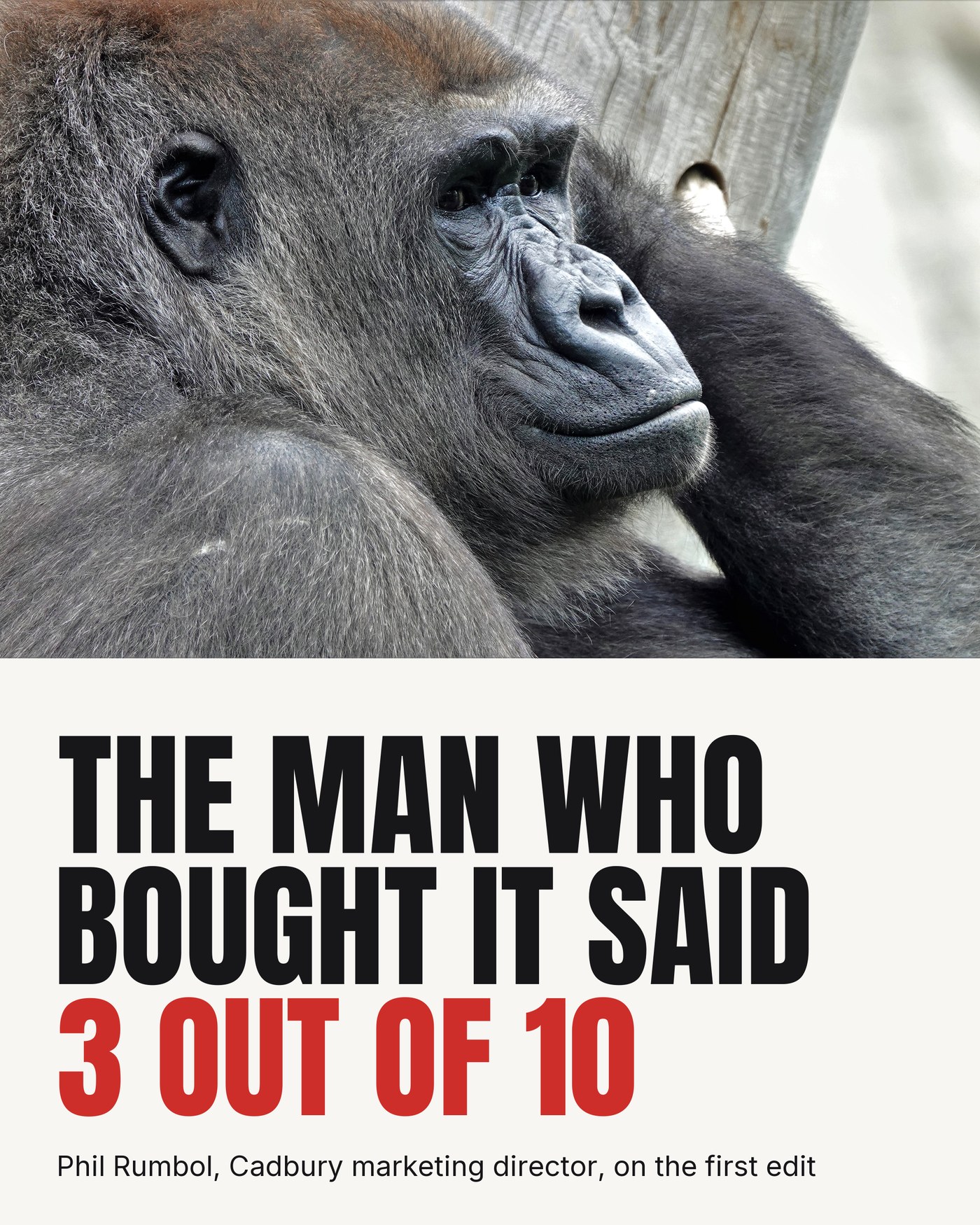
Cadbury’s marketing director, Phil Rumbol, had to sell an advert three times the normal length, with no product in it and no message. He has since said it was the hardest thing he ever had to sell in his career. When he first watched the edit he told the man who made it it was a three out of ten. He watched it again with his family, moved to a six, and put it on air anyway.
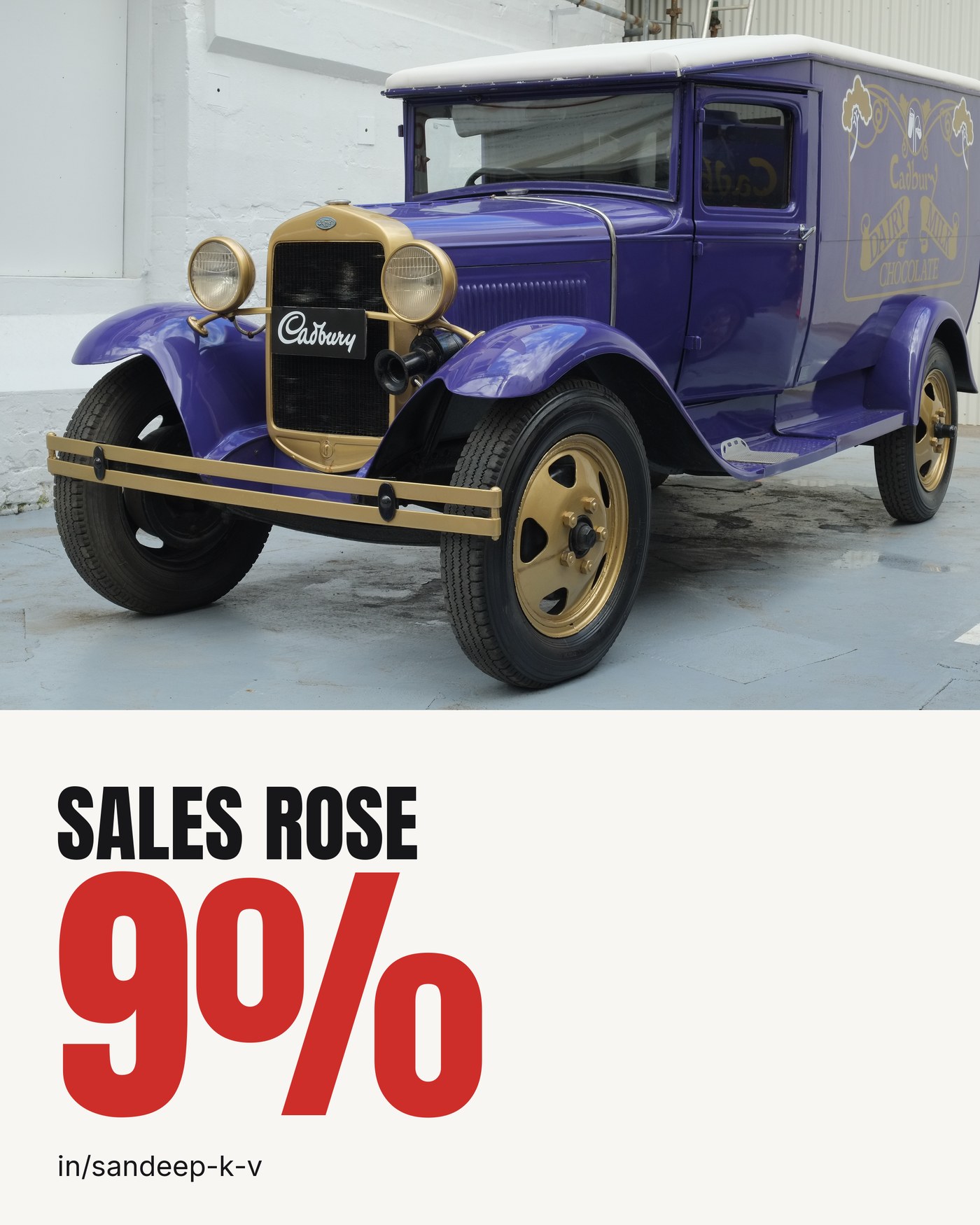
It went out on 31 August 2007, in the Big Brother final. Cadbury reported Dairy Milk sales up 9% on the same period the year before. Twenty per cent more people said they looked favourably on the brand. In the Air Tonight went back into the UK top 20, twenty six years after it came out. The advert took the Film Grand Prix at Cannes the following year.
Here is the part worth thinking about.
When trust takes a hit, the instinct in almost every business is to add information. A statement. A reassurance page. Three more badges at the checkout. A new section in the FAQ answering the accusation nobody has actually said out loud yet. It feels responsible, it is easy to brief, and it can be shown to a board.
Cadbury added no information at all.
Somebody there had worked out that the problem was not what people knew about them. Everyone already knew what had happened, and knowing more about pipe maintenance was not going to change the moment in the shop. The problem was how people felt about them, and explaining does not move that. Nothing you say about yourself does.
The awkward part, and the reason most companies reach for the FAQ instead, is that feeling does not show up on a dashboard. It has no line item, no attribution, no weekly number that goes up. So it loses every internal argument to the thing that does, right up until the point where a competitor with a worse product and warmer advertising takes the shelf space.
Three out of ten, and he ran it anyway. Most ideas that score a three internally never get a second viewing.