Swipe the breakdown ›
Most brands spend their marketing on the one customer who is never going to buy.
Marmite spent its marketing telling that customer they were right.
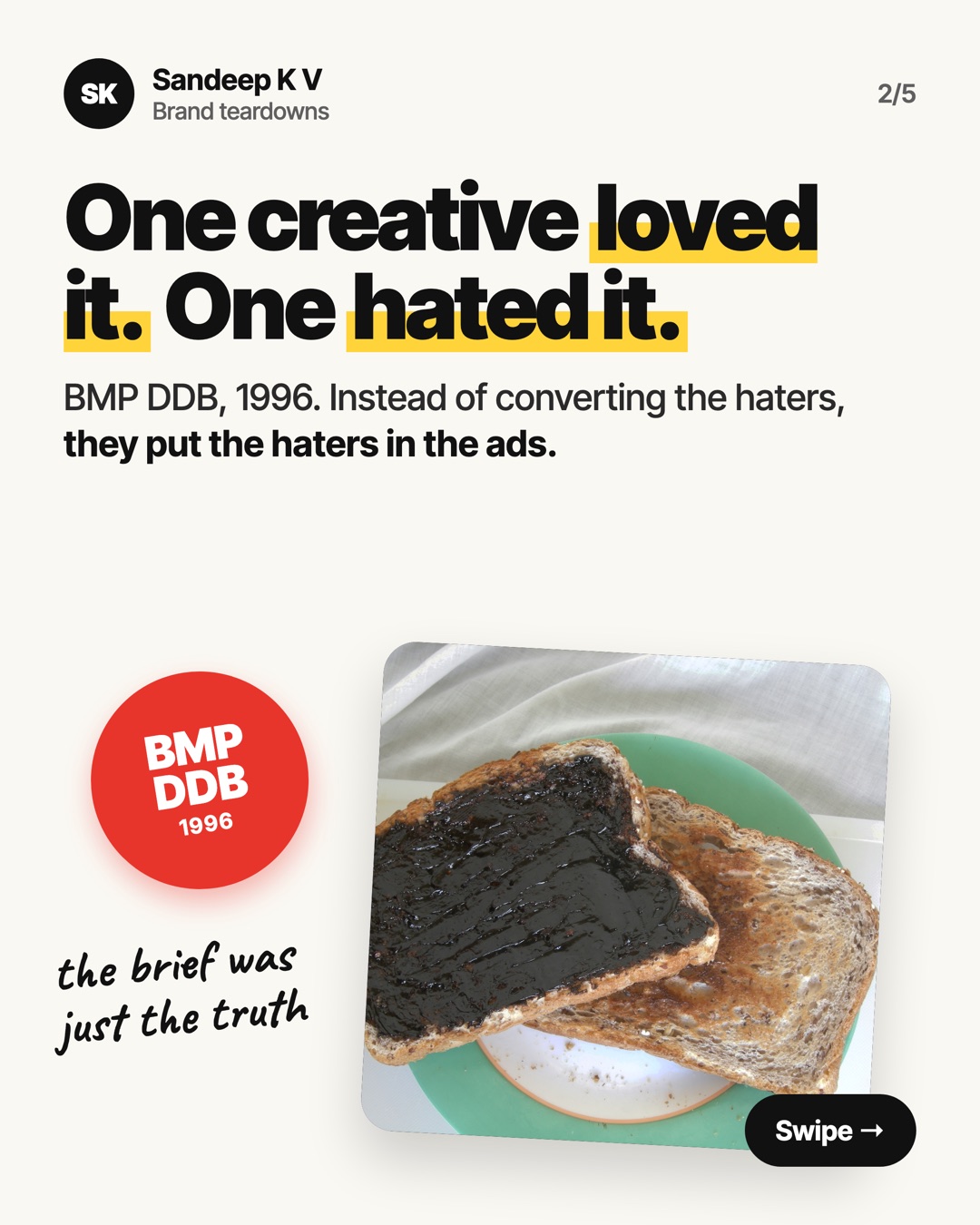
In 1996 two creatives at BMP DDB, Richard Flintham and Andy McLeod, were working on the Marmite account. One of them loved the stuff. The other could not stand it. On most teams that is a problem to fix before the pitch. Soften the taste, add a recipe card, find the angle that finally wins round the doubters.
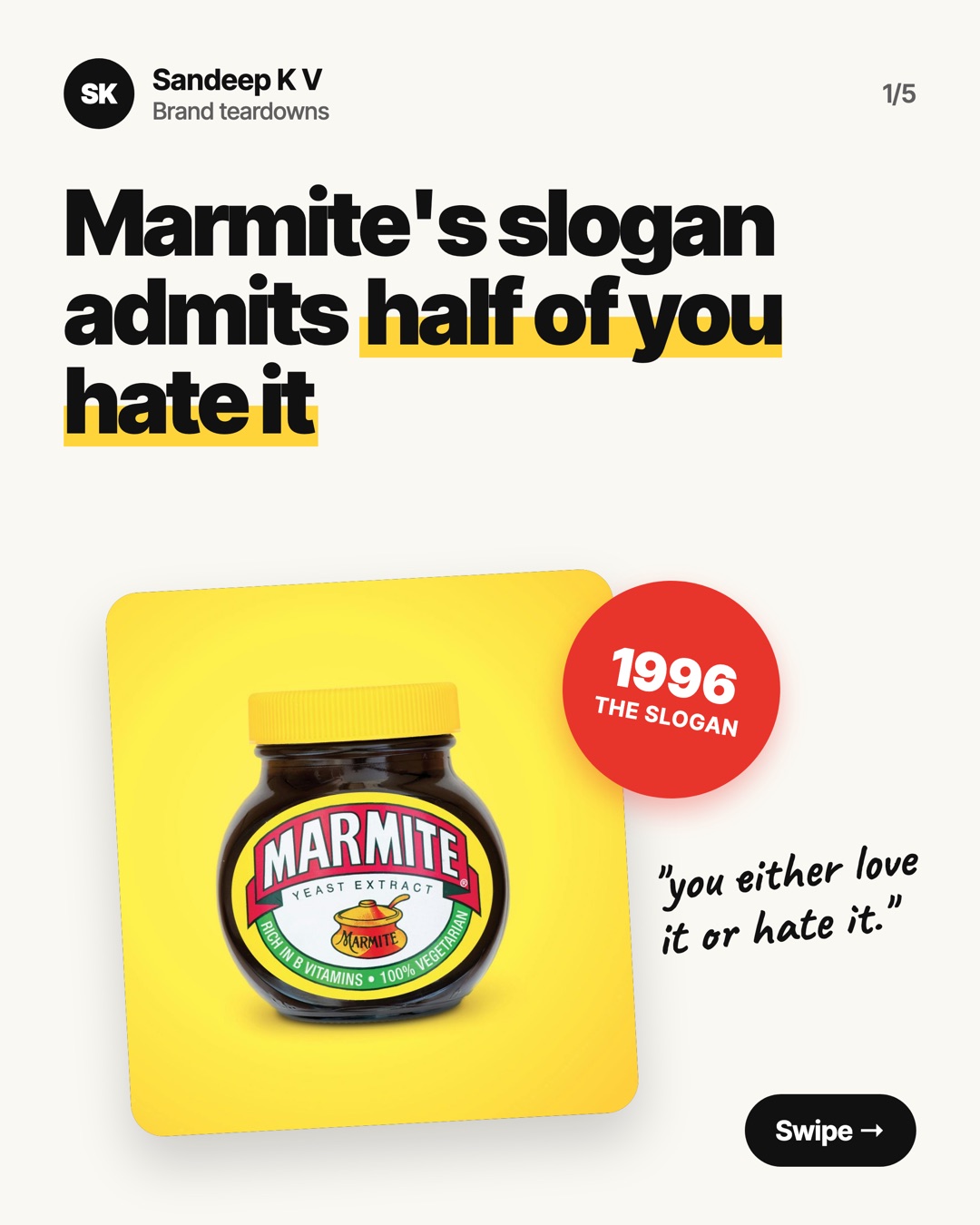
They wrote the argument down instead. You either love it or hate it.
The launch that October ran two ads. One for the lovers. One for the haters. Neither tried to change anybody’s mind. They just said out loud what every breakfast table in Britain already knew.
Here is the part most brands miss.
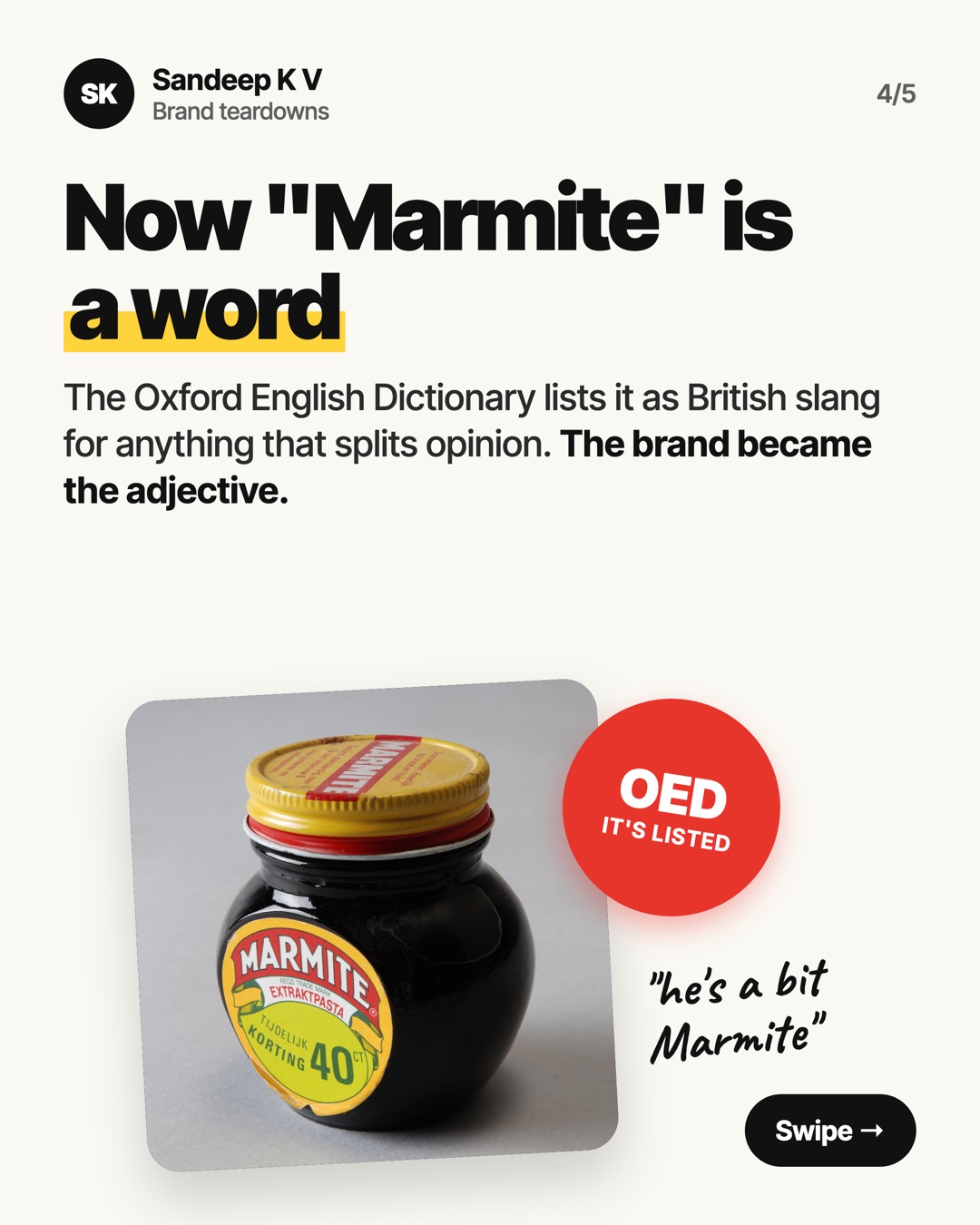
The truth was there before the advert. The Oxford English Dictionary dates “Marmite” as slang for something that splits opinion to 1995, a year before the slogan. The agency did not invent the divide. It just stopped treating the divide as a fault.
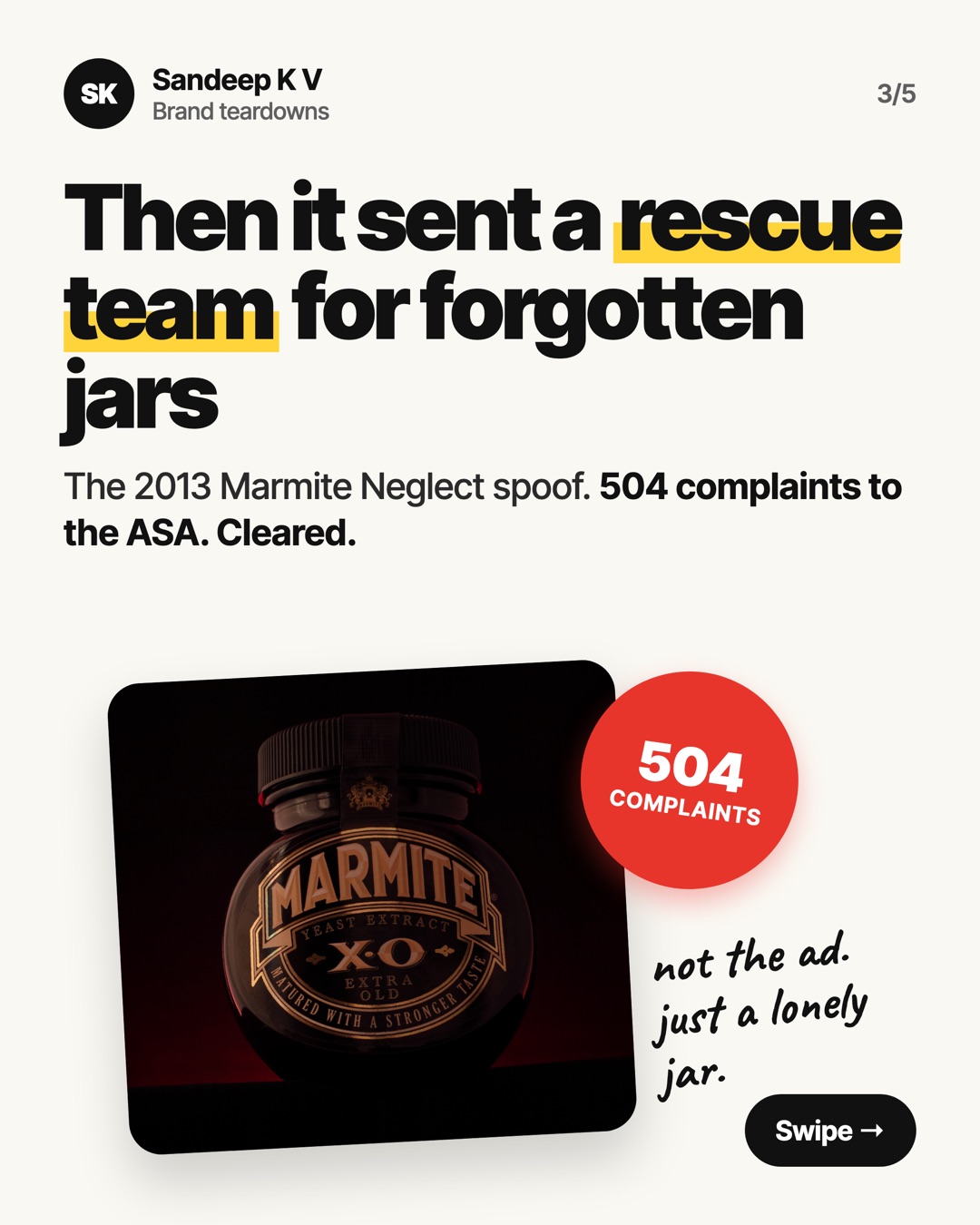
And once a brand owns its divide, it can play with it for decades. In 2013 Marmite ran a spoof documentary about a rescue team saving neglected jars from the backs of cupboards. 504 people complained to the Advertising Standards Authority. The ASA decided most viewers would recognise a spoof and did not investigate. Seventeen years on, the haters were still in the advert, still doing the work, still unpaid.
Now picture your product as a jar on a shelf. Every time you sand an edge off to please someone who was never reaching for it, the jar gets a little rounder and a little easier to walk past. Do it enough times and you have a jar nobody hates and nobody remembers.
That is where most small brands end up. The homepage written for the sceptic. The price trimmed for the bargain hunter who will leave for a cheaper tab anyway. The tone sanded down until it sounds like every other shop on page one.
Marmite went the other way. It kept the edge and put the haters in the ad. Being disliked by the right people is what made it unforgettable to everyone else.
So the job is not to be liked by more people. It is to be loved by the right half, loudly enough that the other half does the talking.
Who is the customer you keep rewriting everything for, who was never going to buy?