Swipe the breakdown ›
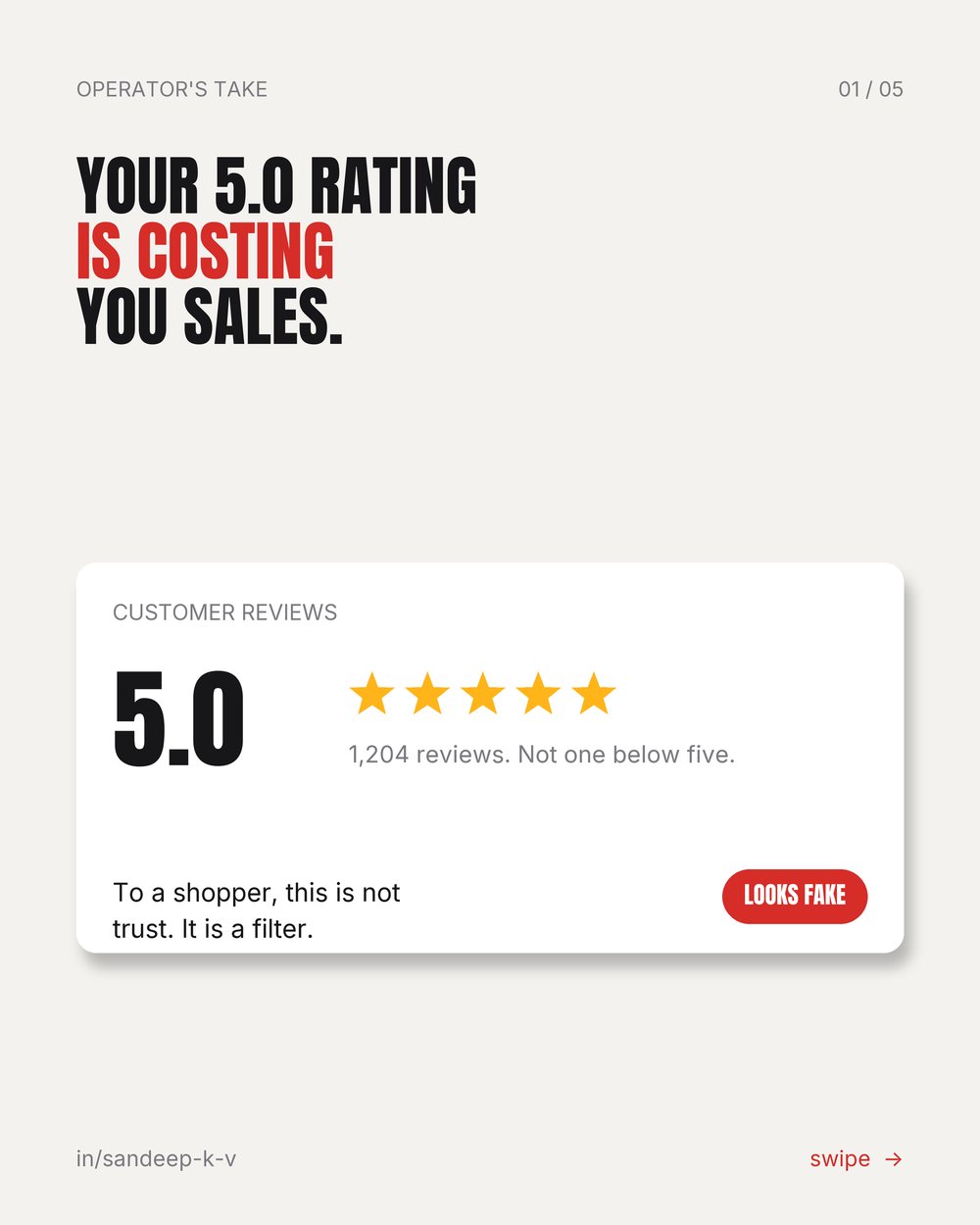
A brand once showed me its product page and pointed at the star rating like a trophy. Five point zero, over a thousand reviews, not a single one below five. I told them it was probably costing them sales.
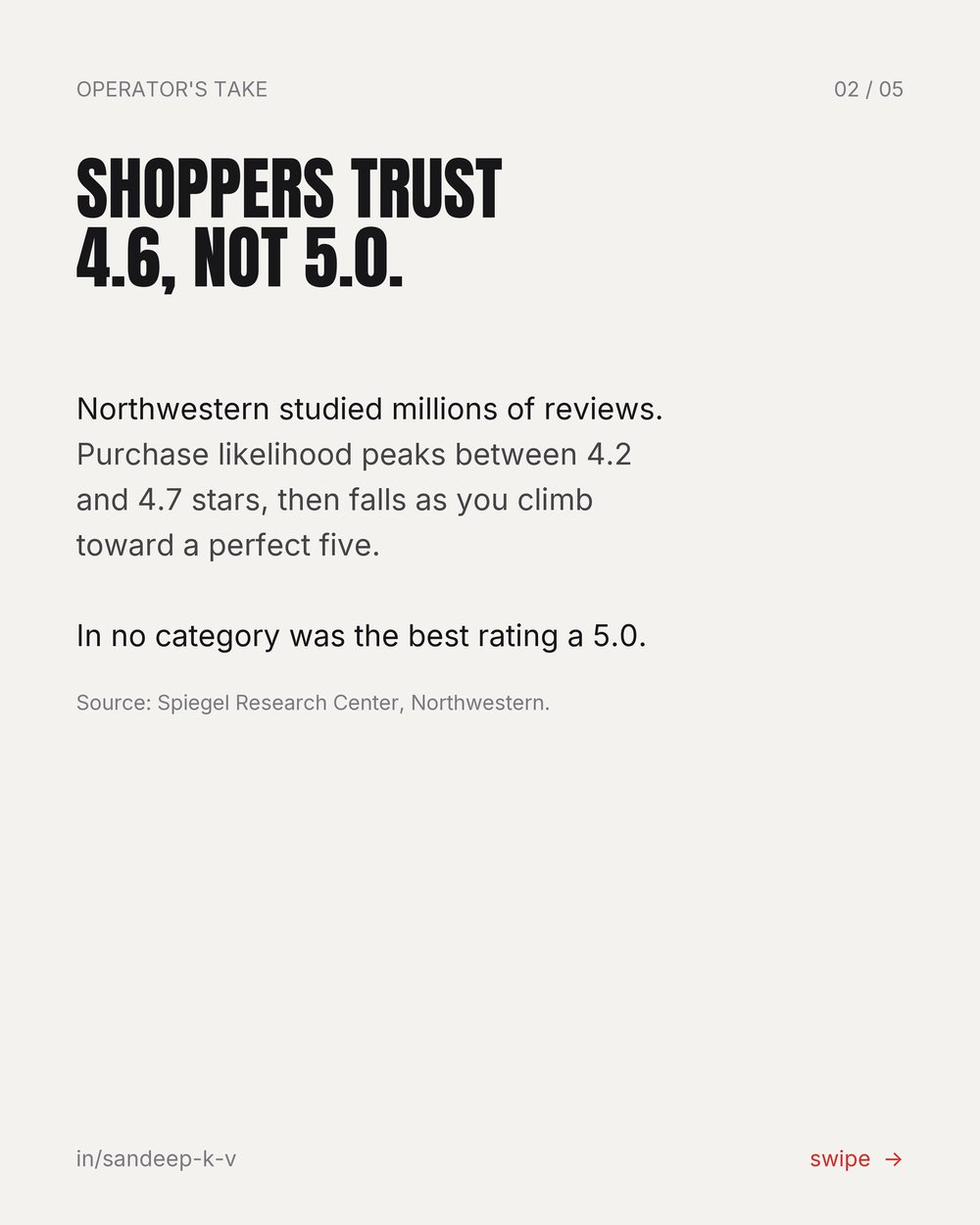
A perfect score does not read as perfect. It reads as filtered. Northwestern’s Spiegel Research Center studied millions of reviews and found the same shape in every category. Purchase likelihood rises with your rating, peaks somewhere between 4.2 and 4.7 stars, then falls as you climb toward five. In no category was the best rating a perfect one.
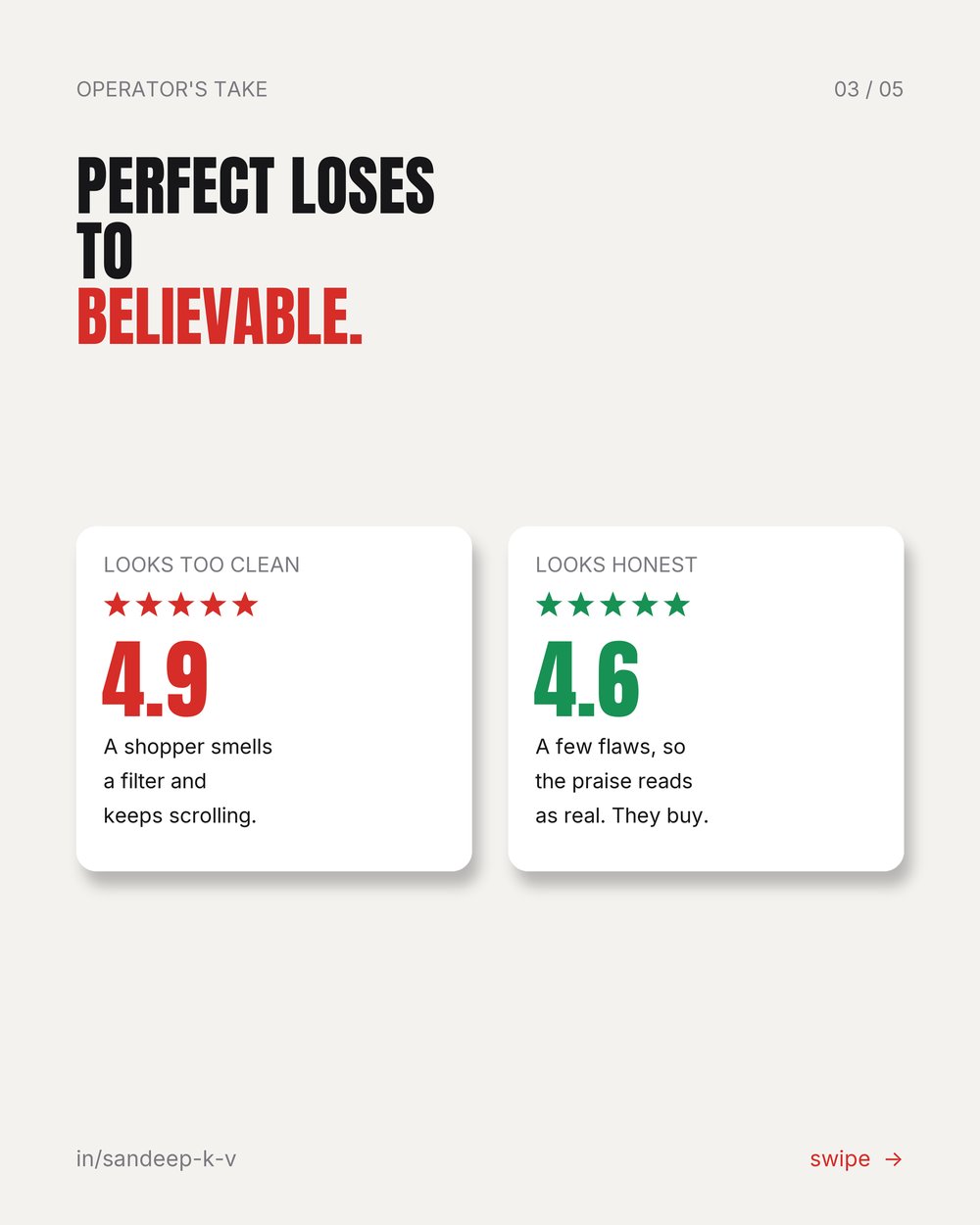
The reason is human. Nobody believes a thousand strangers all loved the same thing to exactly the same degree. A wall of five stars stops looking like a great product and starts looking like a brand that deletes the ones it did not like.
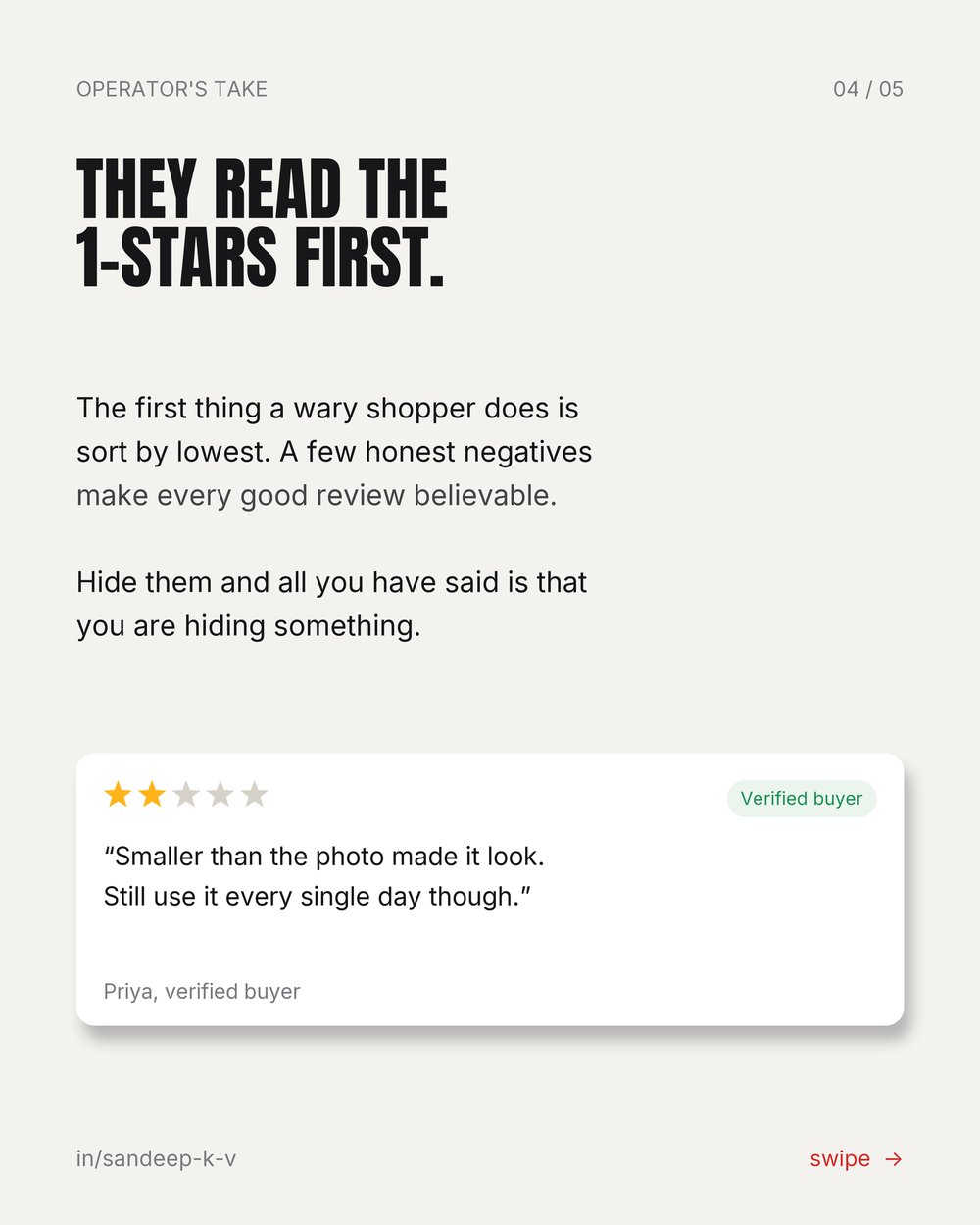
Here is what a wary shopper actually does. They sort by lowest and read the one-star reviews first, because that is where the truth tends to hide. A few honest negatives, left where everyone can see them, are what make the glowing ones believable. Remove them and the only thing you have told people is that you edit.
The instinct to hide a bad review is exactly backwards. A review that says smaller than I expected, still use it every day is not a wound. It is proof the good reviews are real, and it answers the exact objection the next buyer was about to have, in the words of someone with nothing to sell.
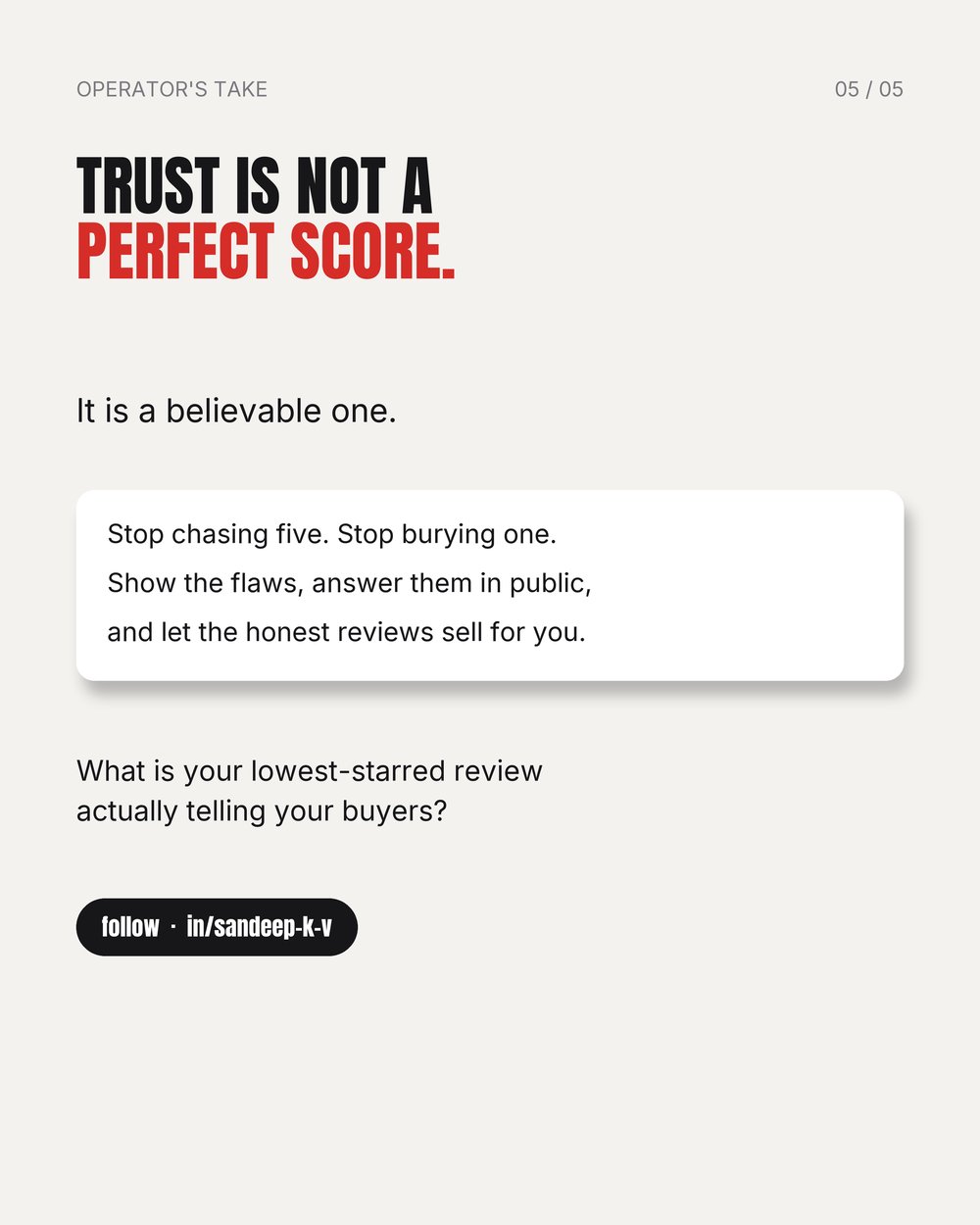
So stop chasing five. Stop burying one. Show the flaws, respond to them in public, and let the honest reviews do the selling. The brands people trust are not the ones with no bad reviews. They are the ones brave enough to leave them up.
Trust was never a perfect score. It is a believable one, and the fastest way to look believable is to stop trying to look perfect.