
Swipe the breakdown ›
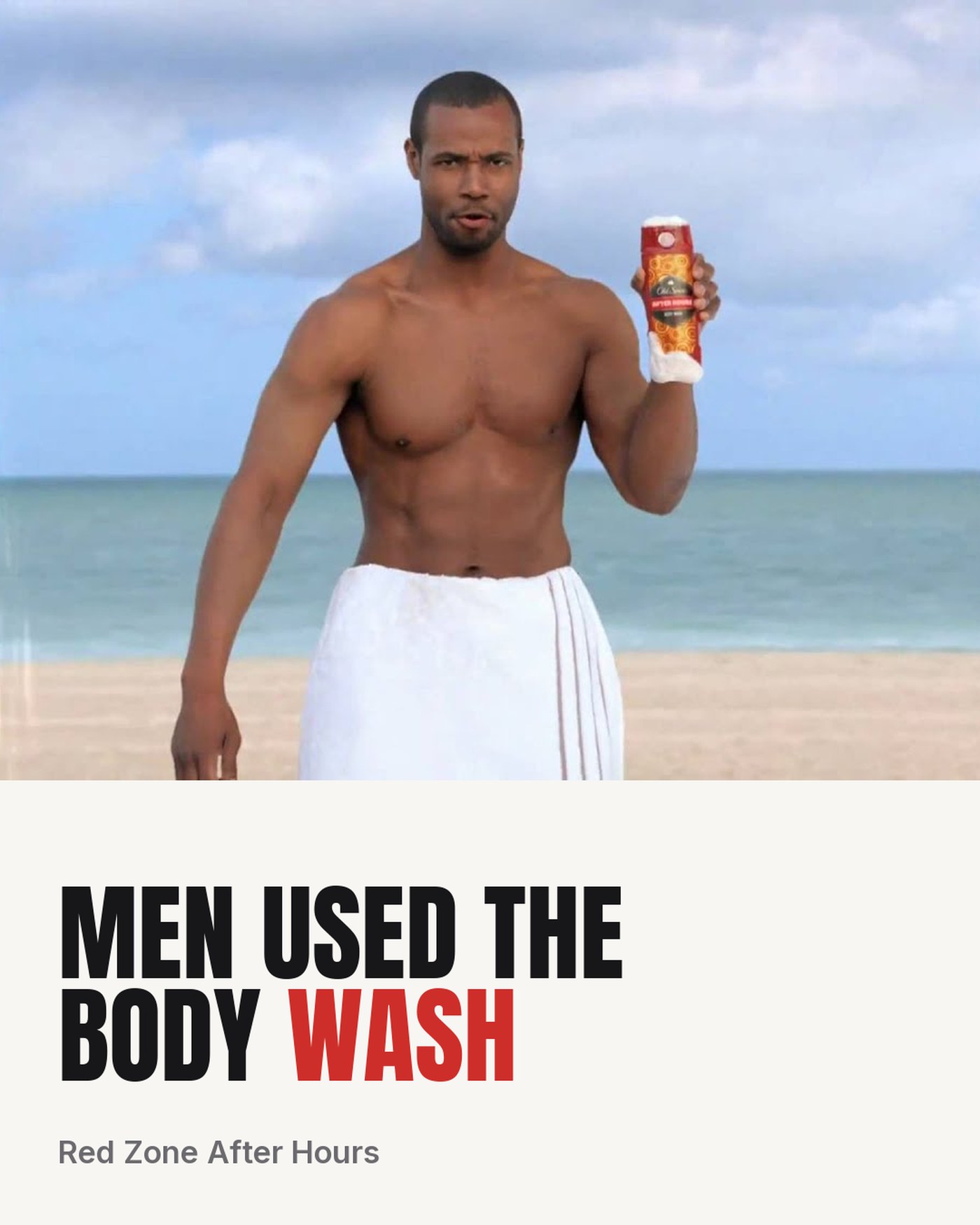
Old Spice had a product problem that was really an audience problem. It was selling body wash to men, and men were not the ones buying it.
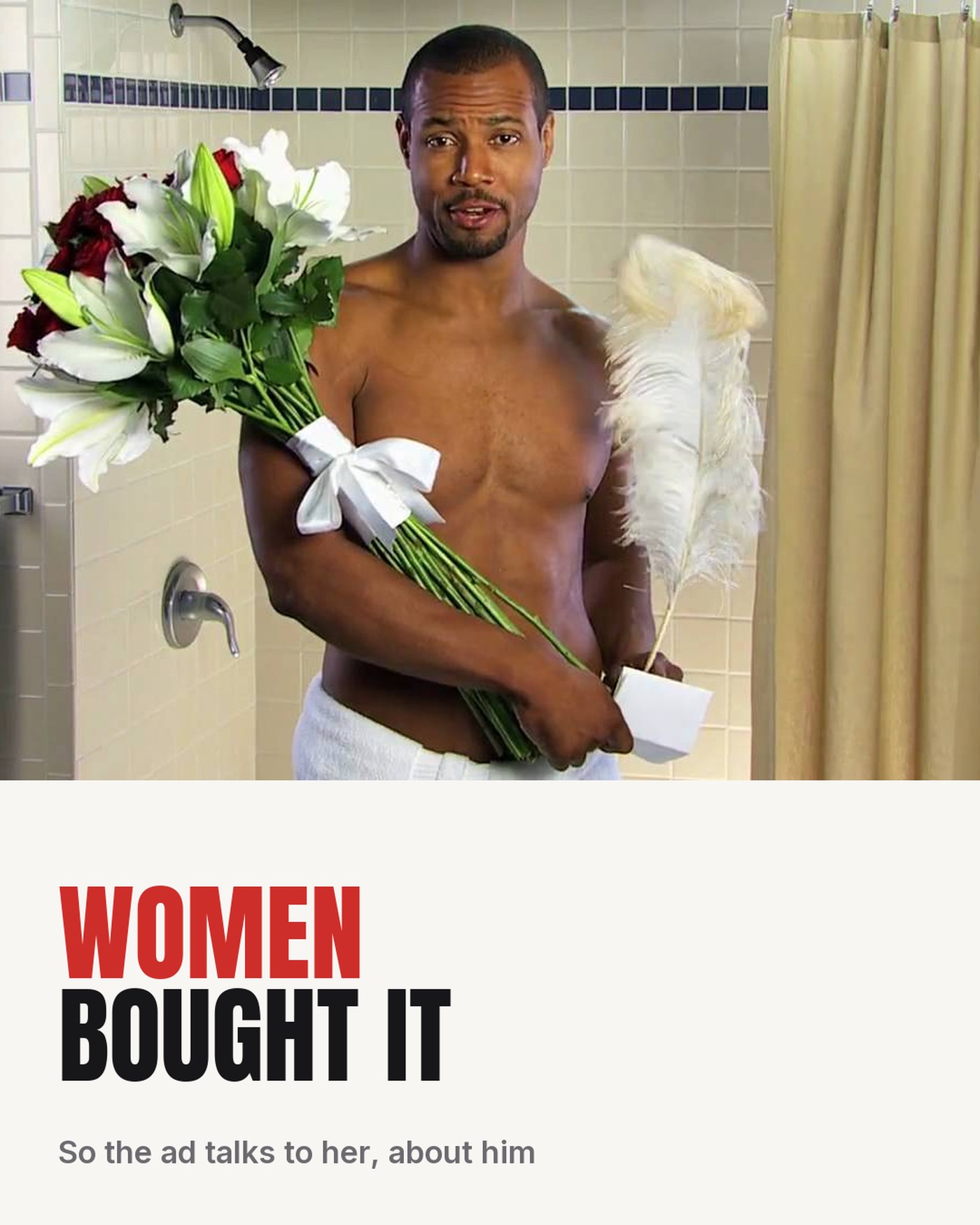
When Procter and Gamble looked properly at who was actually making the decision, the answer was uncomfortable. Women were making most of the purchasing decisions for hygiene products, including for the men in their own household. The men used it. The women chose it. Every pound the brand had ever spent talking to men had been aimed at the person holding the bottle rather than the person holding the card.
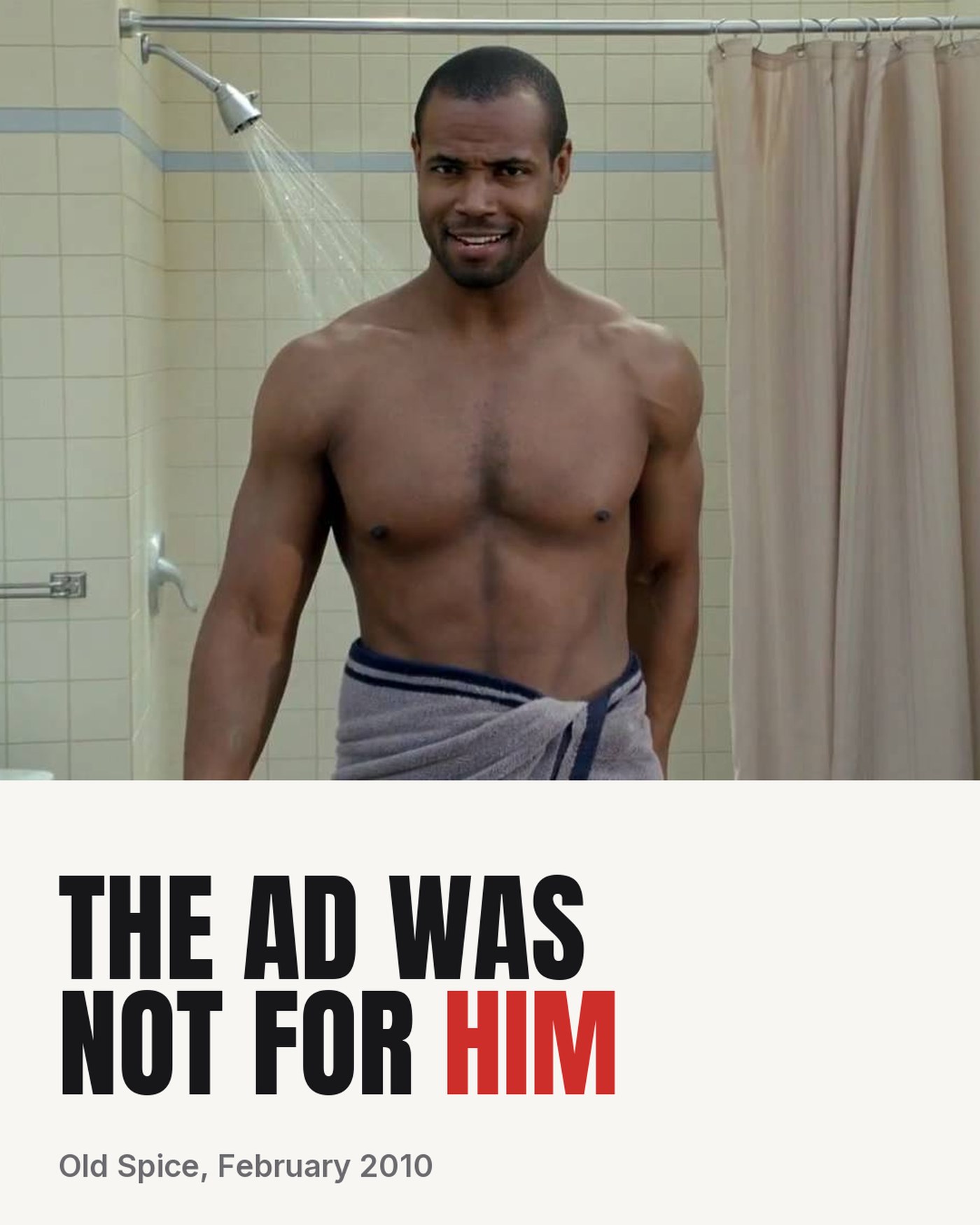
So Wieden and Kennedy made an advert that talks to her, about him. Isaiah Mustafa, one bathroom, one continuous take, thirty seconds, addressed directly to the woman watching. It went online on the 4th of February 2010 and hit American television four days later, deliberately timed for the week after the Super Bowl when attention on advertising is at its highest and the airtime is not.
It worked at a scale nobody plans for. By the end of June it had been watched more than eleven million times. In the middle of July the campaign held eight of the top eleven most popular videos on YouTube. It took the Grand Prix at Cannes and a Primetime Emmy for Outstanding Commercial.
Then came the part people forget. That July the team filmed 186 personalised video replies in about two days, answering real people by name while the conversation was still live. Same insight, different lever. They stopped broadcasting and started answering, and speed became the media buy.
The lesson is not be funny. Plenty of funny adverts sell nothing at all. The lesson is that the person who uses the product and the person who pays for it are often two different people, and most brands only ever write for the user.
This shows up in ecommerce constantly and almost nobody fixes it. The product page argues with the person who will use the thing. It lists the specification, the materials, the features. Meanwhile the person holding the card is asking a completely different set of questions, usually about delivery dates, returns, and whether this is a safe thing to buy for somebody else. Gifting traffic in particular gets served copy written for the recipient, then bounces because the buyer’s actual question was never answered.
It costs nothing to check. Open your best-selling product page and read it as the person paying rather than the person using. If the two are not the same human, you probably have an Old Spice problem.
So who does your product copy think it is talking to?