Swipe the breakdown ›
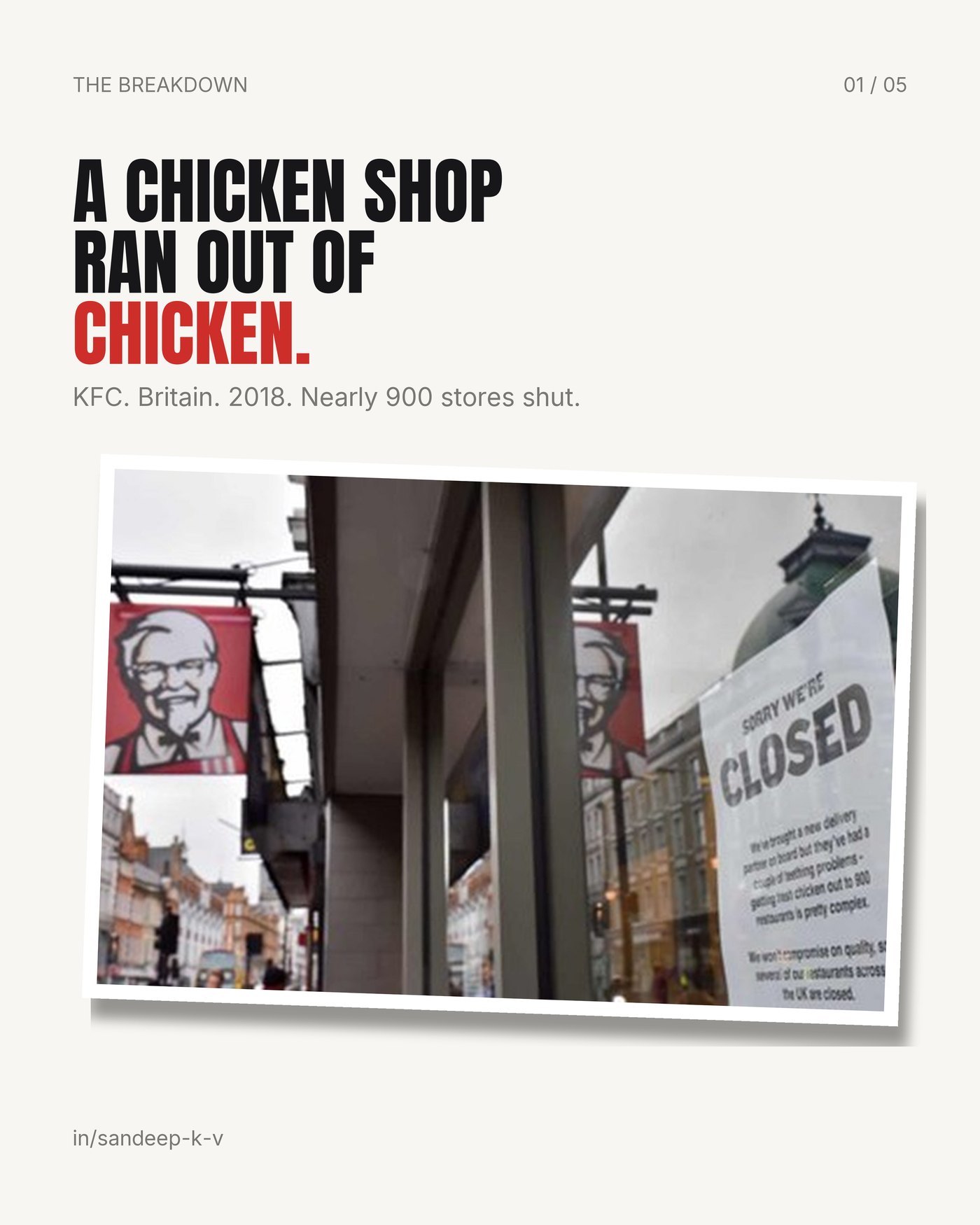
In February 2018, KFC ran out of chicken. Not one shop. Nearly 900 of them, across the country, at the same time. A fried chicken chain with no fried chicken.
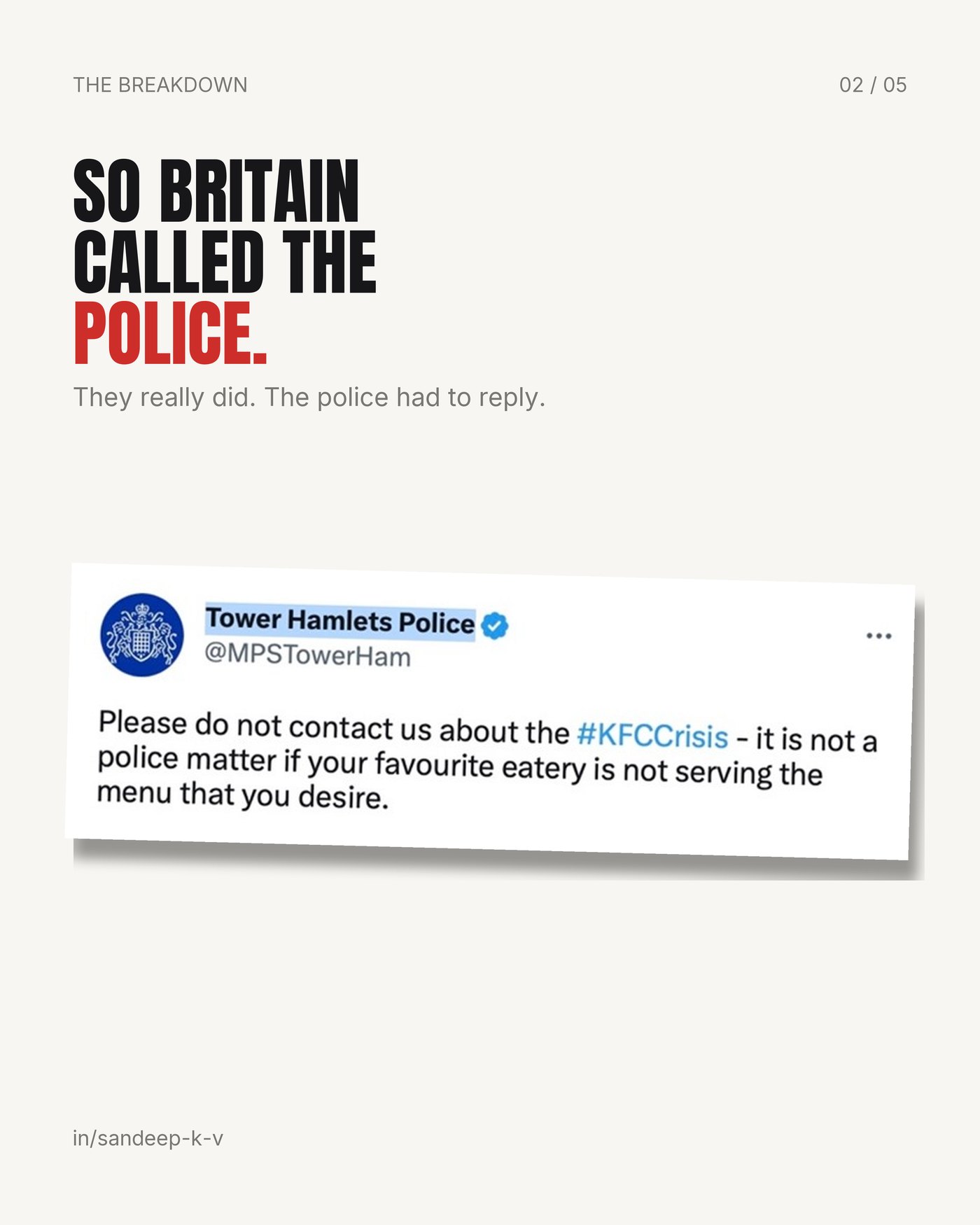
The cause was dull. KFC had switched its delivery contract to a new partner, the new logistics could not get fresh chicken to the restaurants, and the shops shut their doors with apologetic notes taped to the window. The reaction was not dull at all. People were furious, then delighted, then furious again. Some of them actually contacted the police, which is how we ended up with Tower Hamlets Police tweeting that a chicken shop being closed is not, in fact, a police matter.
This is the point where most big companies reach for the corporate statement. The one that says “we apologise for any inconvenience” and means nothing. KFC did the opposite.
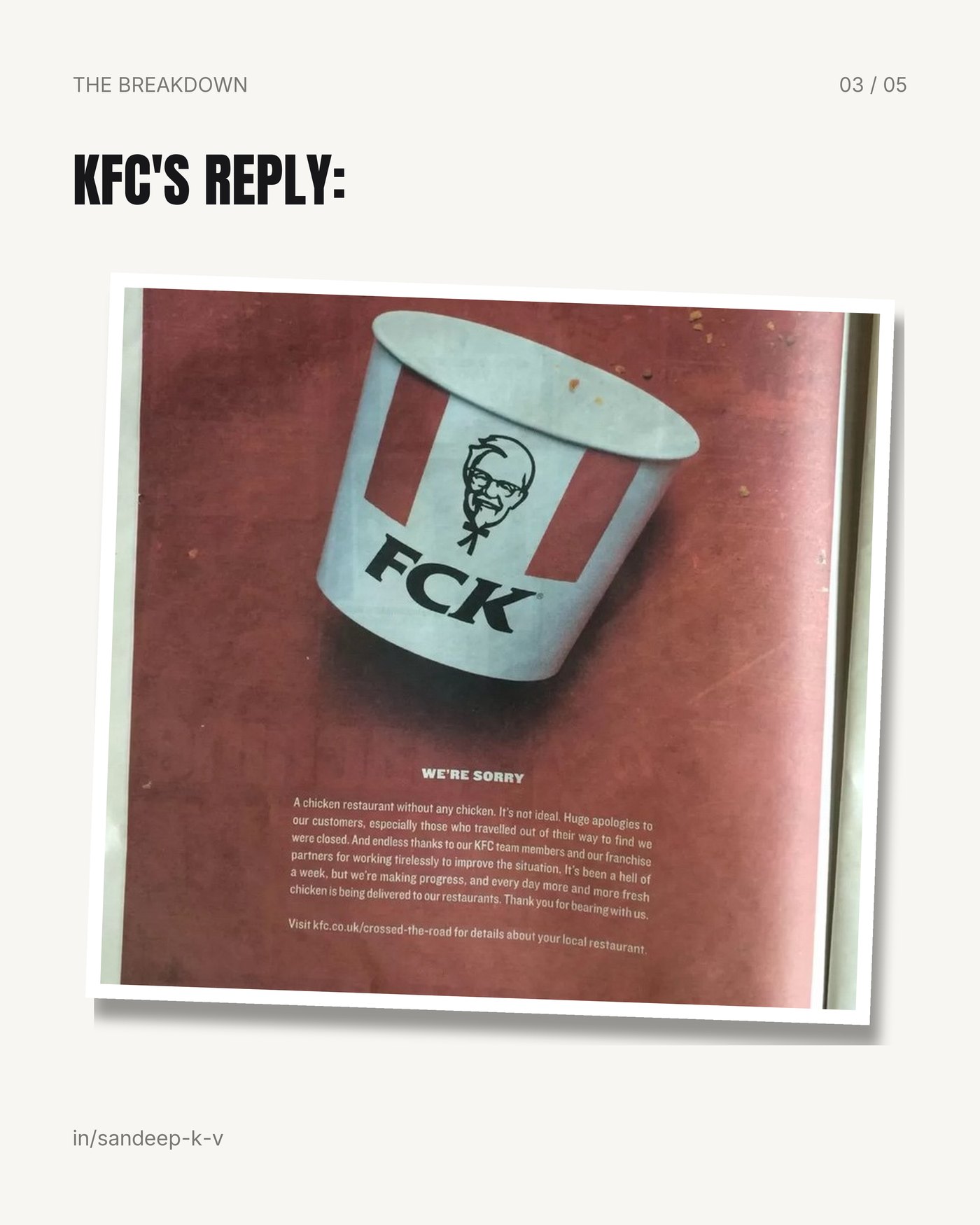
It took out a full-page ad in the Sun and the Metro. A single empty bucket, with the three letters rearranged from KFC to FCK. Underneath, in plain English: a chicken restaurant without any chicken, it is not ideal, huge apologies to our customers, especially those who travelled out of their way to find us closed. No spin. No blaming the supplier by name. Just a joke at its own expense and a genuine sorry.
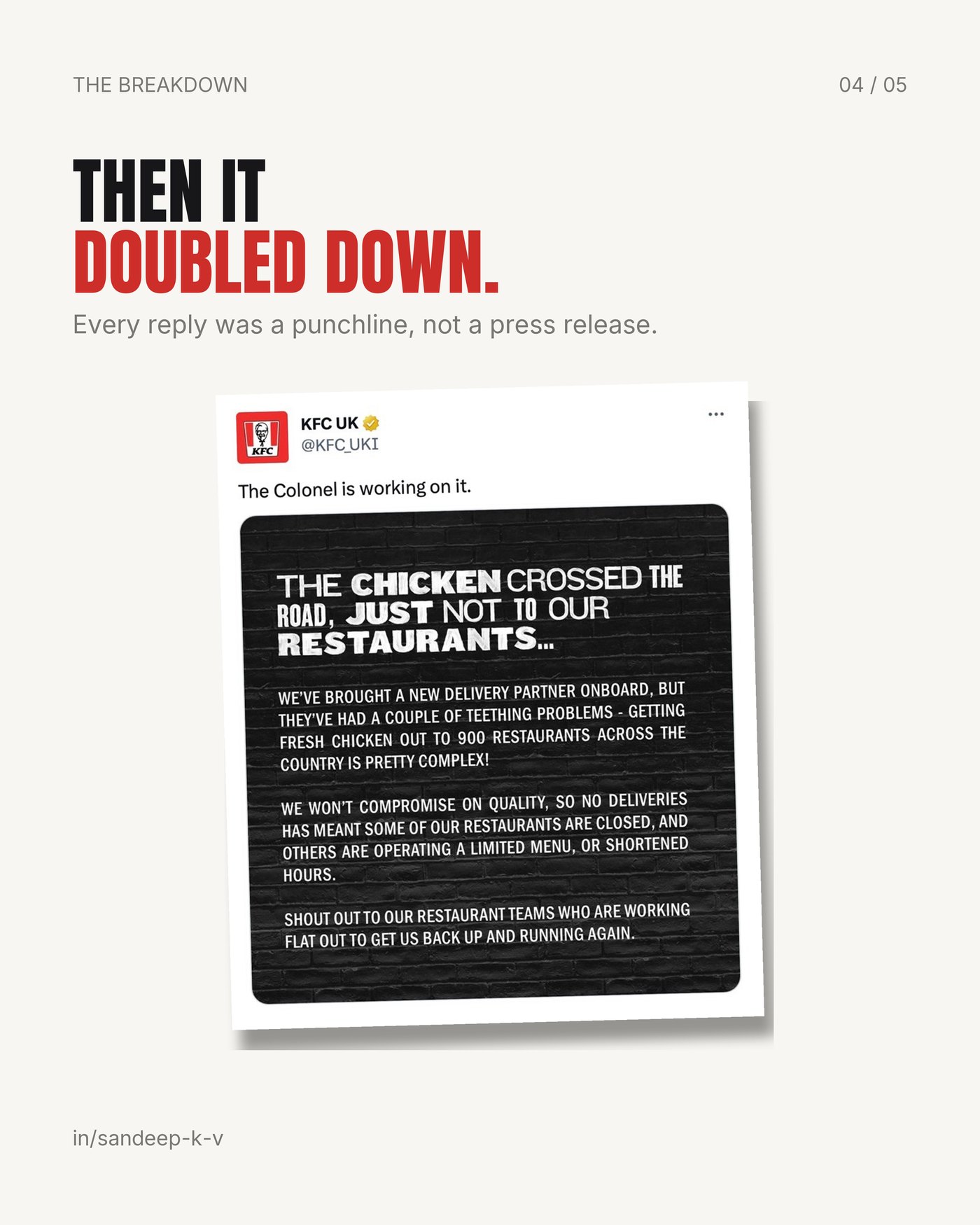
Then it kept going. Every update was written like a human who found the whole thing a bit ridiculous too. The Colonel is working on it. The chicken crossed the road, just not to our restaurants. A brand that could have gone silent and defensive instead invited the whole country to laugh with it.
The result was one of the most awarded and studied pieces of crisis work in British advertising. The shortage was forgotten in days. The FCK bucket is still taught in classrooms. KFC turned a genuine operational failure into a net gain in goodwill, because of how it chose to say sorry.
That is the bit worth stealing. When you mess up in public, the instinct is to minimise, deflect and sound as corporate as possible, because corporate feels safe. It is not safe. It is forgettable, and it reads as guilt. Owning the mistake plainly, with a bit of humour and no excuses, is the thing people actually respect.
So here is the real question. The next time your brand gets something wrong in front of everyone, do you reach for the lawyer-approved statement, or the empty bucket?